
Build Charter School HR Policies That Support Your Team
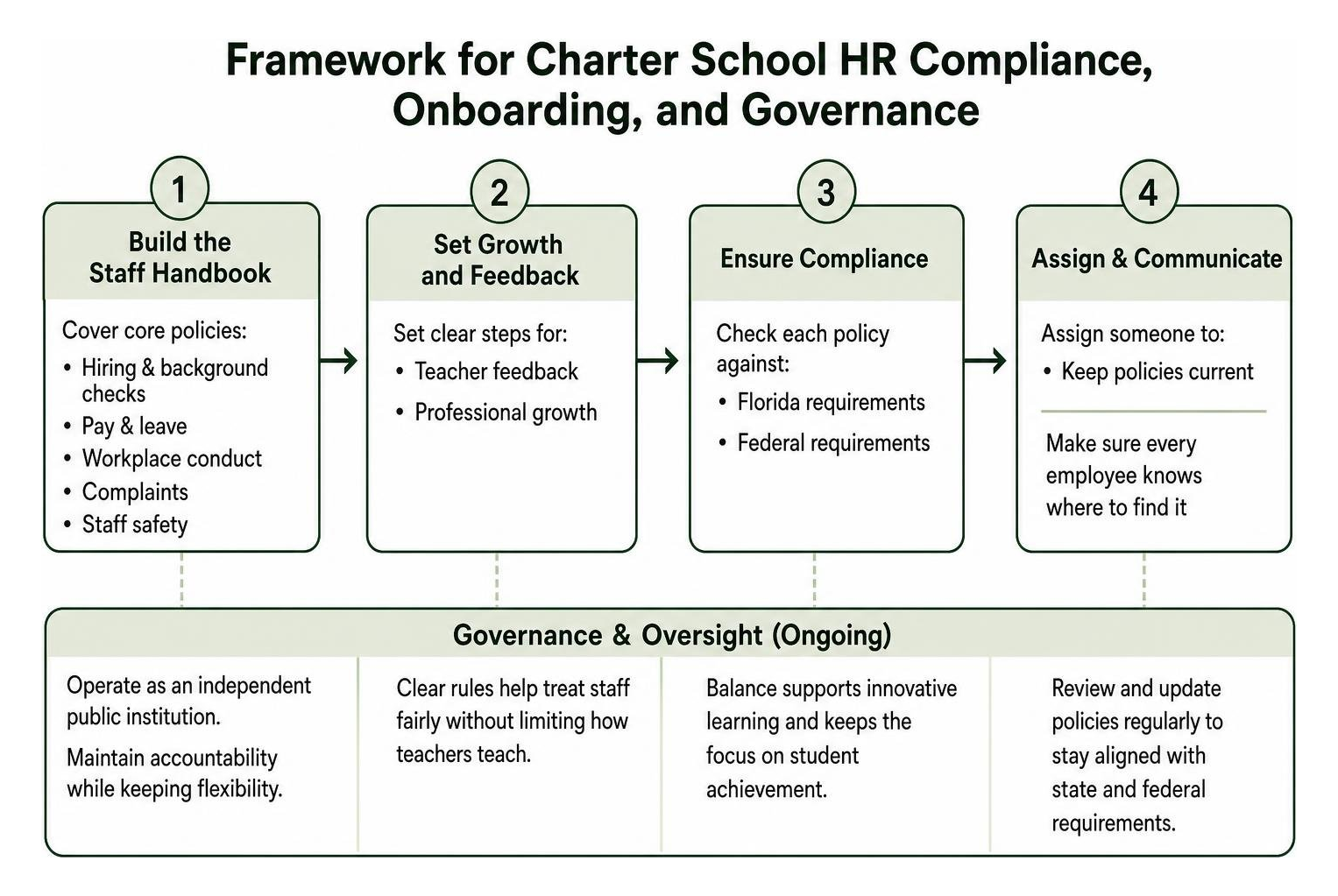
To develop charter school HR policies, start with a staff handbook that covers hiring and background checks, pay and leave, workplace conduct, complaints, and staff safety. Then set clear steps for teacher feedback and professional growth. Check each policy against Florida and federal requirements, assign someone to keep it current, and make sure every employee knows where to find it.
Clear rules help public charter schools treat staff fairly without limiting how teachers teach. That balance gives educators room for innovative learning while keeping the school focused on student achievement.
I’m Lynn Norman-Teck, Executive Director of the Florida Charter School Alliance. My work in charter school development, policy, and community engagement has shown me how practical charter school HR policies can support strong teams and expand educational opportunity for Florida families.
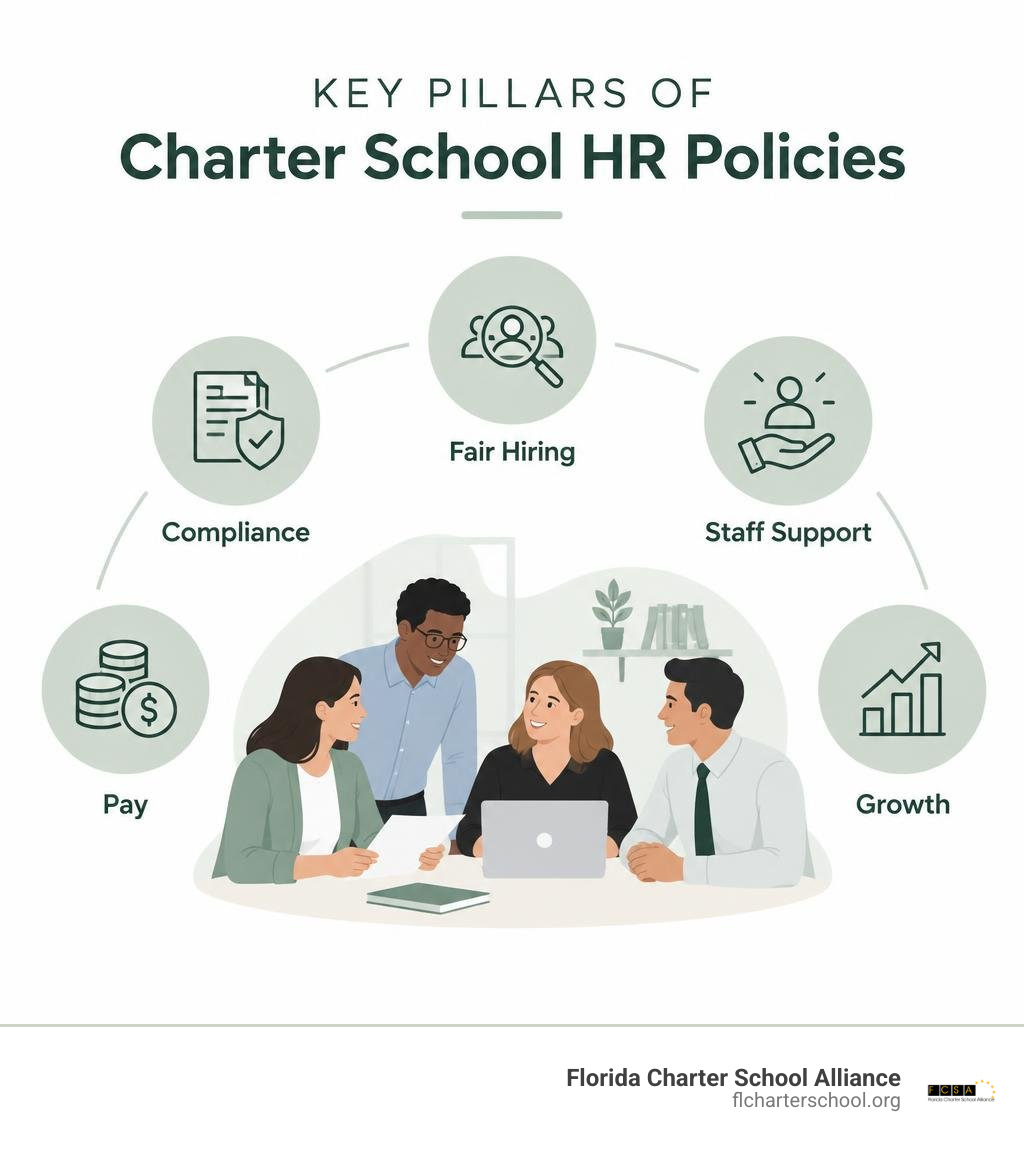
Charter school HR policies terms at a glance:
Essential Charter School HR Policies for Compliance and Legal Governance
Establishing a compliant human resources framework is one of the most critical responsibilities for charter school governing boards and administrative leaders. Operating as independent public institutions, public charter schools must navigate both federal civil rights mandates and state-specific statutory guidelines while maintaining operational flexibility.
A well-constructed employee handbook sets expectations from day one. In Florida, charter school operations are governed by strong accountability standards. School leaders frequently review the state Department of Education’s Frequently Asked Questions on Florida Charter Operations to align their local policies with state standards.
Foundational HR documentation must define employment terms clearly. Most public charter schools utilize at-will employment agreements, meaning either the employee or the school may end the working relationship at any time, while establishing robust internal review processes to ensure fair treatment. Every policy manual should clearly outline:
- Equal Employment Opportunity (EEO) commitments covering all protected classes.
- Rigorous background screening protocols, including fingerprinting and Level 2 background checks before staff enter classrooms.
- Mandatory credential checks to verify degrees from accredited institutions, aligning with updated rules for teacher certification mastery for Florida teachers.
- Detailed compensation schedules, Fair Labor Standards Act (FLSA) non-exempt overtime rules (tracked in precise increments), and leave policies.
- Comprehensive safety procedures, including mandatory child abuse reporting timelines.
Non-Discrimination and Title IX Compliance Guidelines
Every public charter school must maintain clear, proactive policies preventing discrimination, harassment, and retaliation. Compliance with Title IX of the Education Amendments of 1972 is not just a student-safety matter; it protects faculty and staff as well.
Schools must designate a trained Title IX coordinator whose contact information is prominently displayed in staff handbooks and on the school website. Operational HR policies should outline:
- Uniform Grievance Procedures: A documented, step-by-step process for filing, investigating, and resolving employee grievances confidentially and without delay.
- Anti-Harassment and Sexual Harassment Standards: Explicit definitions of quid pro quo and hostile work environment behaviors, paired with mandatory annual staff training.
- Protection Against Retaliation: Clear language guaranteeing that any staff member who reports misconduct or participates in an investigation will not face adverse employment actions.
- Workplace Accommodations: Formal processes for handling reasonable accommodation requests under the Americans with Disabilities Act (ADA) and the Pregnant Workers Fairness Act (PWFA), such as modified schedules, seating adjustments, or designated lactation spaces.
Balancing Staff Autonomy with Charter School HR Policies
Public charter schools thrive on educational innovation. Teachers often choose charter schools because they value the flexibility to craft engaging lessons that spark student curiosity. However, instructional freedom must coexist with consistent, school-wide operational policies.
When staff members feel micromanaged, morale drops; conversely, when policies are vague, operations break down. To balance autonomy and consistency, governing boards and school leaders should implement clear change management strategies. Research shows that 73% of teams that use a well-designed change management plan successfully meet their objectives.
Leaders can protect classroom autonomy by involving teachers in policy decisions, establishing clear boundaries around safety and curriculum standards, and using structured frameworks for operational changes. When educators understand the “why” behind school-wide rules, compliance becomes a shared cultural norm rather than a top-down mandate.
Designing Fair Performance Management and Professional Growth Systems
High-quality education depends on high-quality instruction. Implementing a transparent, fair performance management system ensures educators receive the coaching they need to succeed while keeping schools accountable for student achievement.
Regular feedback is essential for teacher satisfaction. Industry data indicates that 96% of employees believe regular feedback is beneficial, and 83% appreciate both positive reinforcement and constructive guidance. When performance management focuses on coaching rather than punitive evaluation, teacher retention rises and student outcomes improve.
Leaders can establish successful evaluation cycles by referencing effective teacher performance evaluation rubrics to establish clear, objective benchmarks.
Selecting and Implementing Teacher Evaluation Systems
An effective evaluation tool should measure pedagogical skill, classroom culture, and contributions to school success while remaining simple to administer. Administrators can evaluate systems using the ultimate guide to choosing the best teacher evaluation tool to select models that fit their school’s instructional mission.
Key elements of an effective evaluation process include:
- Clear Instructional Rubrics: Establishing transparent performance categories (e.g., lesson design, student engagement, data-driven assessment) shared with teachers at the start of the year.
- Frequent, Low-Stakes Observations: Conducting brief walkthroughs paired with actionable feedback within 48 hours, rather than relying solely on a single high-stakes annual review.
- Collaborative Goal Setting: Allowing educators to set annual professional development goals connected to student growth metrics.
Professional Development and Special Education Staff Support
Investing in continuous professional development (PD) keeps educators engaged and directly improves classroom instruction. In charter schools, where 50% of teachers hold a Bachelor’s degree and 39% have earned a Master’s degree, ongoing learning opportunities provide pathways for career growth.
Professional learning policies must also support special education educators and general education teachers serving students with Individualized Education Programs (IEPs). Meeting the requirements of the Individuals with Disabilities Education Act (IDEA) requires specialized skills. Charter leaders should design policies that provide:
- Dedicated mentorship programs pairing novice educators with experienced instructional coaches.
- Specialized training on IEP accommodations, data collection, and inclusive classroom strategies.
- Support for dual-certification pathways, enabling general educators to earn special education credentials.
- Clear tracking of educator certifications in line with updated educator certification bills taking effect.
Structuring Competitive Compensation, Benefits, and Resource Allocation
Managing compensation in a public charter school requires strategic creativity. Charter schools receive approximately 75 cents for every dollar traditional public school districts receive, making efficient budget allocation essential.
| Factor | Traditional School Districts | Public Charter Schools |
|---|---|---|
| Funding Level | 100% baseline per-pupil revenue plus local tax referendums | Approximately 75 cents on the dollar |
| Salary Schedules | Rigid step-and-column pay scales based strictly on tenure | Flexible, performance-aligned compensation and stipends |
| Benefits Structure | State pension systems and broad group health pools | Tailored retirement plans, flexible benefits, and wellness stipends |
| Resource Agility | Slower administrative reallocation | Fast reallocation toward high-impact classroom roles |
To compete for top talent, charter leaders must leverage customized employee benefit solutions that maximize value for educators without straining the school’s operating budget.
Innovative Benefits Packages Despite Budget Constraints
Competitive benefits packages are critical for recruitment and retention. Charter leaders can look into an employee benefits plan specifically designed for charter schools to offer comprehensive coverage tailored to educational teams.
Creative benefits strategies include:
- Defined Contribution Retirement Plans: Offering 401(k) or 403(b) plans with transparent employer matching.
- Flexible Paid Time Off (PTO) Pools: Providing 10-month instructional staff with dedicated PTO banks and clear rollover or buyback policies.
- Health and Wellness Initiatives: Providing access to mental wellness apps, employee assistance programs (EAPs), and preventative health stipends.
- Tuition and Certification Assistance: Reimbursing teachers for completing certification exams or advanced educational coursework.
Optimizing Resource Allocation for Charter School HR Policies
Resource allocation in charter schools must balance administrative compliance with classroom investment. Leaders must ensure every dollar spent directly advances student-centered learning.
When structuring personnel committees or reviewing hiring recommendations, governing boards must follow clear legal standards regarding board authority and public records. For example, the Florida Attorney General’s advisory opinion on Charter schools, team to review personnel decisions emphasizes the importance of open-government compliance during personnel evaluations. Schools can reduce overhead by automating routine HR workflows—such as PTO requests, onboarding paperwork, and timesheets—allowing administrators to spend more time supporting teachers in classrooms.
Fostering Positive Culture, Combating Burnout, and Building Diverse Teams
More than half of teachers report experiencing burnout during their careers. Heavy workloads, administrative demands, and student behavioral challenges can drain even the most passionate educators. Addressing burnout requires intentional workplace policies and a supportive school culture.
Data shows that a positive work culture produces satisfied teams that are 12% more productive than average. Building a resilient culture involves:
- Protecting Planning Time: Guarding scheduled teacher planning periods from unnecessary administrative meetings.
- Recognizing Excellence: Celebrating staff achievements publicly through peer recognition programs and milestone awards.
- Clear Work-Life Boundaries: Establishing practical guidelines regarding after-hours emails and communication expectations.
Building diverse teams is equally essential. Research indicates that white-identifying professionals account for 86.2% of secondary teachers and 82.5% of elementary and middle school teachers nationwide. Public charter schools serve diverse student populations, and students benefit greatly from seeing their backgrounds reflected in their school leadership and teaching faculty.
To build and sustain diverse teams, charter HR policies should incorporate:
- Broad Outreach: Partnering with diverse colleges, universities, and community organizations during recruitment.
- Structured Interview Panels: Utilizing diverse hiring committees and standardized interview rubrics to reduce unconscious bias.
- Inclusive Retention Practices: Creating supportive affinity groups and leadership development pathways for underrepresented educators.
Frequently Asked Questions About Charter School HR Management
What are the most effective strategies for retaining high-quality charter school teachers?
The most effective retention strategies combine competitive compensation, consistent feedback, leadership opportunities, and a healthy work culture. Teachers stay when they feel supported by their administration, have access to high-quality professional development, and are given the tools and autonomy needed to help their students succeed.
How do charter schools maintain HR compliance with fewer administrative staff?
Charter schools maintain compliance by centralizing policies in a clear, annually updated employee handbook, utilizing specialized HR and payroll management software, and participating in statewide support networks. Regular policy audits ensure compliance with state and federal employment laws without overloading administrative teams.
How can charter schools attract a more diverse teaching staff?
Schools can attract diverse talent by expanding recruitment networks beyond traditional job boards, building relationships with historically Black colleges and universities (HBCUs) and Hispanic-Serving Institutions (HSIs), creating welcoming school environments, and offering clear paths for professional advancement.
Conclusion
Building strong, compliant, and supportive human resources policies is fundamental to the long-term success of every public charter school. When school leaders implement fair hiring practices, consistent evaluation systems, competitive benefits, and positive workplace cultures, they empower teachers to do their best work.
At the Florida Charter School Alliance, we support charter leaders, governing boards, and educators across the state as they build schools of academic excellence. Ensuring every school has the resources needed to recruit and support outstanding educators is central to our mission, including our ongoing advocacy for fair public school student funding. By aligning your HR policies with your educational mission, you build a foundation where educators thrive and students achieve their highest potential.