
How to Choose a Charter School That Fits Your Child
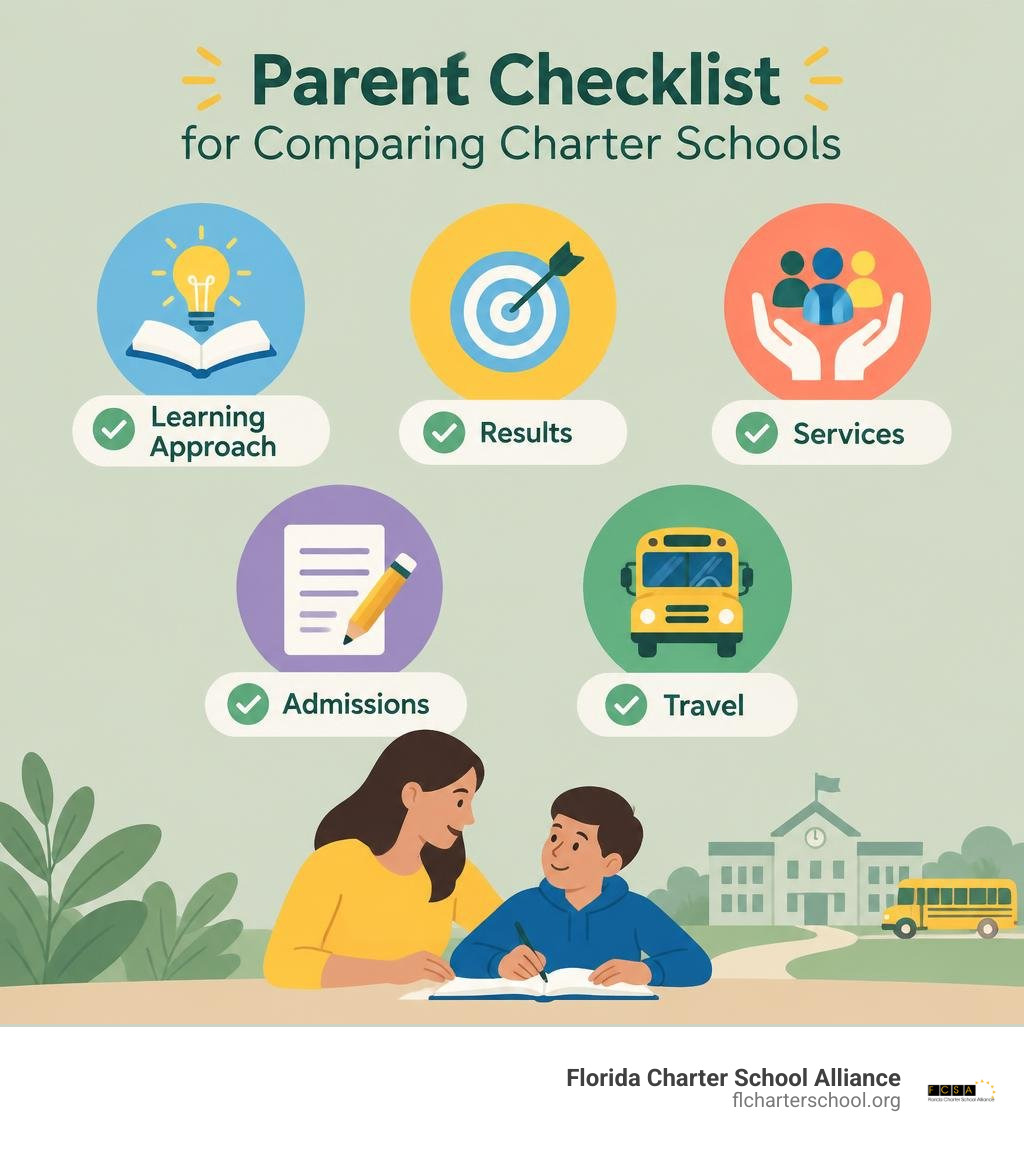
Charter schools are tuition-free public schools that give Florida families more choice. To find a good fit, compare each school’s teaching approach, academic results, and student services. Ask whether its programs match your child’s interests, including the arts, and check the application deadline, lottery rules, and transportation options before you apply.
I’m Lynn Norman-Teck, Executive Director of the Florida Charter School Alliance. My work in charter school development, policy, and community engagement has shown me how much clear information matters when families choose a school.
Understanding Charter Schools: Definition, Funding, and Governance
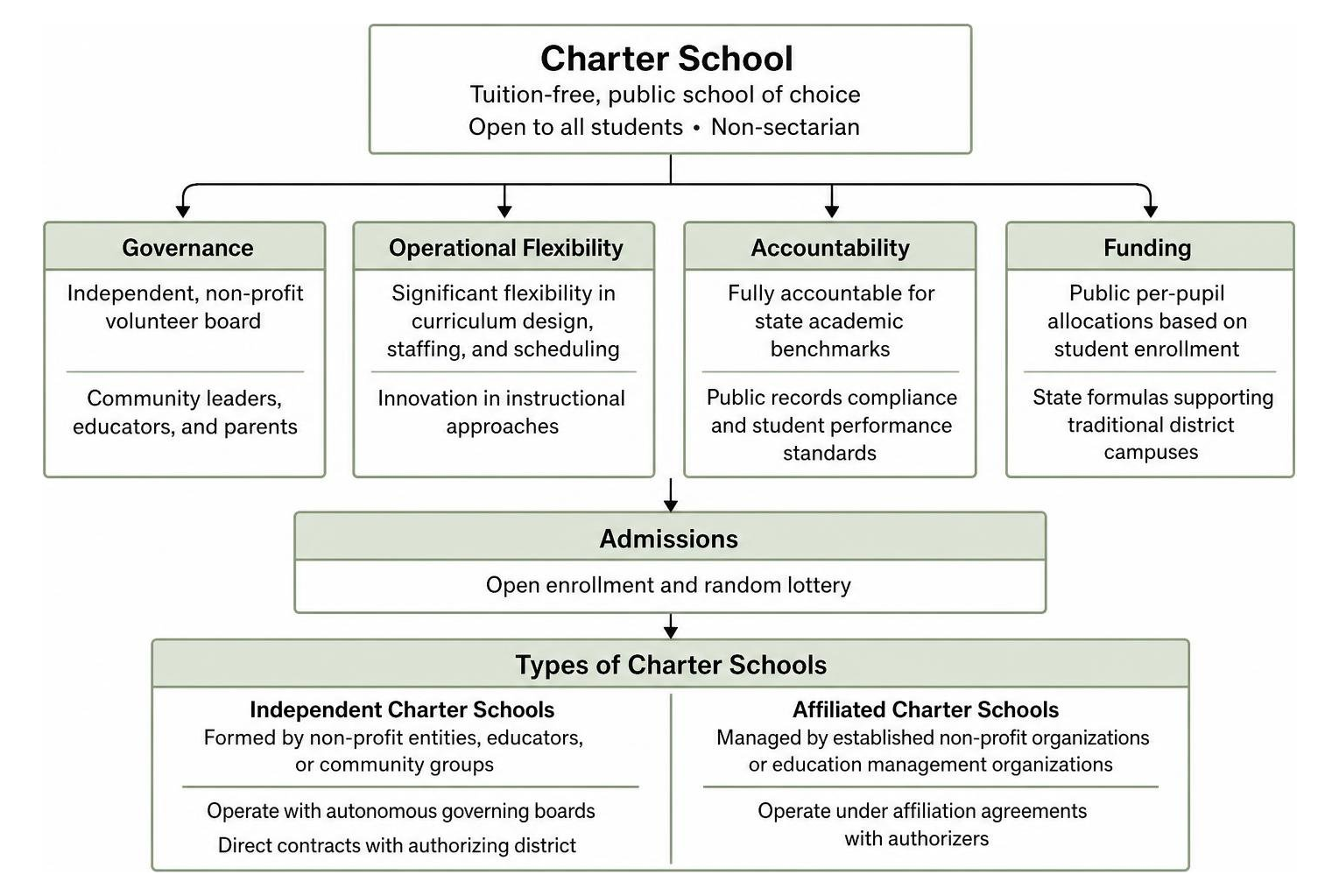
Every child learns differently, and navigating educational choices is one of the most vital decisions a family makes. Public charter schools are free, public institutions of choice that operate under an agreed-upon contract—or “charter”—with an approved authorizing entity, usually the local district school board.
Unlike private schools, charter schools never charge tuition for the regular school day. They are open to all students, non-sectarian, and governed by independent, non-profit volunteer boards consisting of community leaders, educators, and parents. While they enjoy significant operational flexibility in curriculum design, staffing, and scheduling, they remain fully accountable for state academic benchmarks, public records compliance, and student performance standards.
The table below breaks down the primary differences between educational models:
| Feature | Traditional Public School | Public Charter School | Private School |
|---|---|---|---|
| Tuition Required | No (Tuition-free) | No (Tuition-free) | Yes (Tuition-based) |
| Governance | Local elected school board | Non-profit governing board | Private board or organization |
| Curriculum Flexibility | Strict district standards | Highly flexible & innovative | Complete institutional discretion |
| Funding Source | Local, state, & federal taxes | State & local per-pupil funding | Tuition, fees, & private donations |
| Admissions Basis | Neighborhood attendance zones | Open enrollment & random lottery | Selective admissions criteria |
| State Testing & Accountability | Mandatory state assessments | Mandatory state assessments | Exempt from public school testing |
Charter schools receive public per-pupil allocations based on student enrollment counts, mirroring the state formulas that support traditional district campuses. To explore state-level directories, parents can visit the Florida Department of Education Charter School Directory. For a deeper look into budget structures, review our guide to operational funding models and public allocations. Examining the differences between charter and traditional public options helps families weigh their choices effectively.
Key Types and Operational Models in Public Education
Exploring public education allows families to tailor their child’s academic journey. Whether evaluating options across different neighborhoods or comparing approaches, navigating school choice for modern families reveals a broad range of models. Across the state and nation, non-profit operators design diverse educational environments, which parents can explore in resources like the K12Scan National Charter Directory.
Independent vs. Affiliated Charter Schools
Public charter schools fall primarily into two structural categories:
- Independent Charter Schools: Formed by non-profit entities, educators, or community groups, these schools operate with autonomous governing boards. They hold direct contracts with their authorizing school district, maintaining complete flexibility over budgets, staffing, instructional design, and daily operations.
- Affiliated or Conversion Charter Schools: These represent existing traditional public schools that have converted to charter status following a vote of support from teachers and parents. They blend local district policy alignment with site-level operational autonomy, often maintaining specific neighborhood enrollment boundaries while implementing innovative curriculum models.
Specialized Academic Themes and Instructional Approaches
Charter schools are designed to foster educational innovation and provide specialized learning environments that cater to unique student strengths:
- STEM and STEAM Academies: Programs focusing on science, technology, engineering, arts, and mathematics emphasize inquiry-based learning, robotics, coding, and laboratory research.
- Classical Education: Grounded in a traditional liberal arts curriculum, classical schools emphasize literature, history, logic, and character development.
- Montessori and Project-Based Learning: These campuses encourage self-directed discovery, collaborative hands-on projects, and multi-age learning environments.
- Arts Immersion Programs: Incorporating visual, performing, and musical arts into core academic instruction to build creative expression.
- Municipal and Workplace Charters: Florida allows innovative partnerships, such as charter schools-in-a-municipality serving local residents, or charter schools-in-the-workplace, which partner with major regional employers to offer convenient schooling for employees’ children.
Admissions, Eligibility, and Student Selection Processes

Every child residing within a sponsoring school district is eligible to attend a public charter school. Charter schools cannot use selective testing, academic auditions, or socioeconomic criteria to screen public applicants. Families seeking local options can use statewide school directories and local campus locators to identify campuses in their area.
Open Enrollment and the Public Random Lottery
When interest in a charter school exceeds the number of available classroom seats, state law mandates an equitable admissions process:
- Application Windows: Schools announce designated open enrollment periods each year.
- Oversubscription Assessment: If total student applications remain below school capacity, all eligible applicants are accepted directly.
- Public Random Lottery: When applications exceed capacity, a blind, publicly held lottery drawing determines which students receive seats.
- Statutory Preferences: State rules allow limited enrollment preferences for siblings of currently enrolled students and children of school staff or military families.
- Waiting Lists: Applicants not initially selected via the random drawing are placed on an ordered waiting list and offered seats as spaces open up.
Transportation, Special Education, and Student Services
Ensuring equitable educational access requires robust student services:
- Exceptional Student Education (ESE) and IEPs: Public charter schools are open enrollment public institutions and must provide required accommodations, special education therapies, and Individualized Education Programs (IEPs) in full compliance with federal civil rights and disability laws.
- English Language Learners (ELL): Charters deliver language instruction, bilingual support materials, and English acquisition services.
- Transportation Logistics: Many charter schools offer regional hub busing or dedicated routes within standard reasonable distances. Where direct bus fleets are not operated, schools coordinate carpooling networks and public transit partnerships.
- Nutrition Services: Campuses participate in the National School Lunch Program, providing free and reduced-price meals to qualifying families.
Evaluating Academic Performance and Accountability Standards

Charter schools operate under a framework of performance-based accountability: autonomy in exchange for measurable academic excellence. Transparent school report cards and student learning gains ensure that public charter campuses remain dedicated to high outcomes. Families can review detailed academic growth and student achievement data to see how specific schools perform statewide.
How Authorizers Hold Charter Schools Accountable
Charter school authorizers—typically local district school boards—conduct comprehensive ongoing reviews:
- Performance Contracts: Charters outline binding academic achievement targets, financial audit requirements, and operational goals.
- Charter Renewal Cycles: Successful schools undergo comprehensive contract renewal reviews every 5 to 15 years.
- Financial Auditing: Independent certified public accounting firms conduct annual financial audits submitted to the authorizer and state officials.
- Corrective Action and Revocation: Authorizers hold the legal authority to revoke a charter or decline contract renewal if a school exhibits persistent academic underperformance or fiscal mismanagement.
Measuring Academic Growth and Student Achievement Gains
To assess school quality, parents should look at both proficiency levels and annual student learning gains on state assessments. High-performing charter schools often deliver substantial learning gains, closing proficiency gaps across diverse demographic groups.
When touring candidate campuses, parents should evaluate several key factors:
- Alignment between the school’s stated instructional mission and daily classroom practices
- Teacher credentials, retention rates, and professional development support
- Student-to-teacher ratios and targeted small-group intervention resources
- Campus safety protocols, modern learning technology, and physical security measures
- Active parent-teacher organizations and family engagement opportunities
Frequently Asked Questions About School Choice Options
Can out-of-district students enroll in a public charter campus?
Yes. Under state open enrollment laws, families may apply to any public charter school across county lines, provided the school has capacity after accommodating in-district applicants.
What happens if a chosen school fails to meet performance goals?
If a school struggles academically, the authorizer places it under a structured school improvement plan. If improvement goals are not met over an extended evaluation cycle, the authorizer may decline contract renewal, and families are supported in transitioning to nearby high-performing public schools.
How do school meal and transportation services work for enrolled families?
Charter schools coordinate transportation plans within defined radius zones and administer meal programs under federal nutritional guidelines. Families should ask about specific bus routes and dining services during their enrollment tour.
Conclusion
Finding the right educational fit empowers students to discover their passions, build confidence, and achieve academic excellence. By understanding governance, instructional approaches, and accountability measures, parents can confidently choose an educational path that helps their children thrive. We encourage you to research local campuses, schedule school tours, and learn more about Florida charter schools as you guide your child’s academic journey.