
Why Charter School Authorizer Relations Define Your School’s Future
Charter school authorizer relations sit at the heart of every public charter school’s ability to open, operate, and thrive. Your authorizer — also called a sponsor — is not just a regulatory checkbox. They are your school’s legal umbrella, your accountability partner, and, in many cases, your Local Education Agency (LEA).
Here is a quick overview of what you need to know:
| Key Question | Quick Answer |
|---|---|
| What is an authorizer? | A government-designated agency that approves, oversees, and can close charter schools |
| Who can be an authorizer? | Local school districts, state agencies, independent boards, higher education institutions, and (in some states) nonprofits |
| What do they oversee? | Academic performance, financial health, organizational compliance, and special education |
| How often are charters not renewed? | About 7% of contracts are not renewed annually; another 2.4% close mid-term |
| Why does the relationship matter? | Authorizer decisions directly influence student achievement, school autonomy, and long-term sustainability |
Getting this relationship right is not optional. It is the difference between a school that grows and one that struggles — or closes.
Charter schools are powerful proof that public education can be innovative, accountable, and student-centered all at once. But even the most visionary school leader can run into serious trouble without a clear strategy for managing the authorizer relationship.
That is exactly what this guide is designed to help you with.
I’m Lynn Norman-Teck, Executive Director of the Florida Charter School Alliance, and I’ve spent my career working at the intersection of public charter school policy, community engagement, and school development — including the complexities of charter school authorizer relations across Florida and beyond. In the sections ahead, I’ll walk you through the frameworks, best practices, and compliance strategies that can help your school build a strong, productive relationship with its sponsor.
Understanding the Landscape of Charter School Authorizer Relations

To manage charter school authorizer relations effectively, we must first understand the unique dynamic of this public-private partnership. Charter schools are built on a simple bargain: autonomy in exchange for accountability. We receive the operational flexibility to design innovative learning models, but we must deliver high student achievement and maintain strict compliance with state and federal laws.
When a charter school and its sponsor share a mutual commitment to educational opportunity and school success, the relationship becomes a catalyst for academic excellence. When communication breaks down, however, the oversight process can feel like an administrative hurdle rather than a collaborative effort to support student-centered learning.
The Dual Accountability of Public Charter Schools
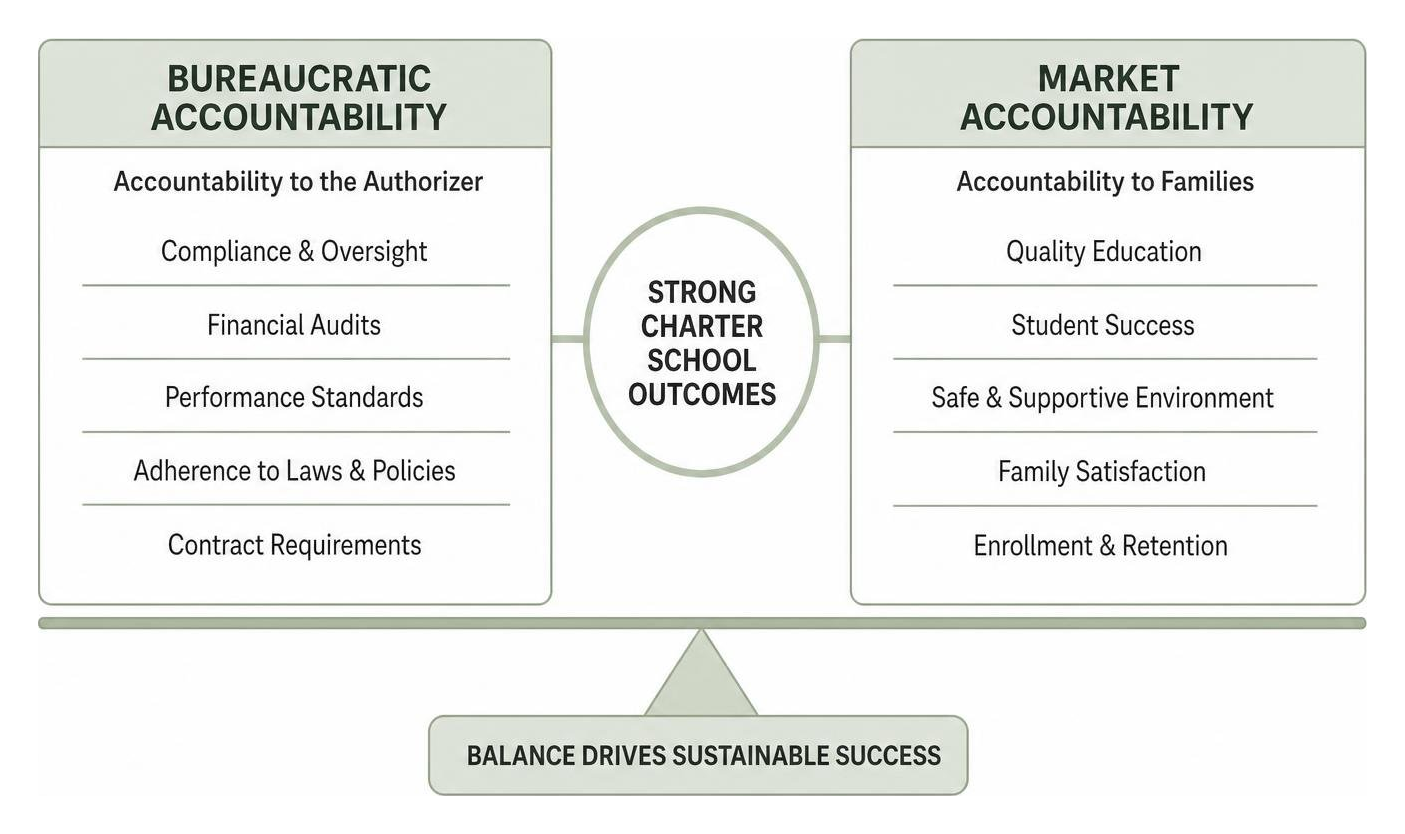
Public charter schools are unique because they navigate two distinct accountability pathways simultaneously:
- Bureaucratic Accountability: This is the formal oversight conducted by the authorizer. It involves compliance monitoring, financial audits, and adherence to Charter School Law. Authorizers evaluate whether the school is meeting the specific performance standards outlined in its contract.
- Market Accountability: This is the direct feedback loop from families. Because charter schools rely on parental choice, we must consistently deliver a safe, high-quality education. If parents are not satisfied with the educational environment or academic progress, they can choose to enroll their children elsewhere.
Balancing these twin forces requires a sophisticated operational approach. Excellent school leaders do not just focus on test scores; they build robust internal controls to satisfy bureaucratic requirements while maintaining the innovative learning environments that attract families in the first place.
National Diversity in Charter School Authorizer Relations
Across the United States, the legal entities empowered to authorize public charter schools vary dramatically. According to the Charter School Authorizers – AEFP Live Handbook, the national landscape is highly fragmented, which directly impacts how oversight is conducted.
Nearly 90% of all authorizers across the country are local education agencies (LEAs), typically local school districts. However, because many of these districts only authorize one or two schools, they oversee only 47% of the nation’s charter schools. Conversely, state education agencies (SEAs) oversee an average of more than 82 charter schools each, accounting for 21% of the national charter school portfolio.
Here is how different authorizer types distribute across the United States:
| Authorizer Type | National Market Share (Schools) | Average Portfolio Size | Key Characteristics |
|---|---|---|---|
| Local Education Agencies (LEAs) | 47% | Small | Often focus heavily on local district compliance and alignment. |
| State Education Agencies (SEAs) | 21% | Very Large | High-volume oversight; heavily standardized compliance systems. |
| Independent Chartering Boards | 17% | Medium to Large | Dedicated solely to charter authorizing; often highly professionalized. |
| Higher Education Institutions (HEIs) | 9% | Medium | Often bring research-backed academic perspectives to oversight. |
| Nonprofit Organizations | 5% | Medium (~30 schools) | Permitted in select states; performance can be highly variable. |
| Noneducational Government | 1% | Small | Mayors or city councils; often focused on urban revitalization. |
This diversity means that a charter school’s operational experience is heavily shaped by the type of authorizer it works with. For instance, research indicates that students in nonprofit-authorized schools have standardized test scores that are, on average, 0.09 standard deviations lower than their peers in other charter settings. This highlights the critical role that strong, capable authorizing institutions play in safeguarding student achievement.
State-Specific Frameworks: Florida and South Carolina Models
State policy dictates the rules of engagement for charter school authorizer relations. To see how much these frameworks can differ, we can look at the contrasting models of Florida and South Carolina. Both states are deeply committed to expanding educational access and high-quality education, but they structure their sponsor-school relationships in very different ways.
The Florida Sponsor Landscape and Collaborative Compliance
In Florida, the authorizing landscape is streamlined. Under state law, only local school districts can serve as sponsors for charter schools operating within their geographic boundaries. This means that Florida charter school leaders must work closely with their local school boards to maintain operational compliance.
Because of this district-centric model, establishing clear communication and standardized processes is essential. For years, our state has worked to refine this dynamic. For example, the Florida Department of Education implemented Changes to Model Forms for Charter Schools and Their Sponsors November 2019 to create more uniform expectations and reduce administrative friction during the application and renewal processes.
We also actively participate in District Charter Collaborative Compliance initiatives. These collaborative discussions bring together district staff and charter operators to talk through complex issues like student mental health, safety protocols, and drop-out prevention. When sponsors and schools view compliance as a shared, collaborative goal, we protect school autonomy while ensuring that public dollars are spent effectively to improve student-centered learning.
The South Carolina Sponsor Model and the LEA Function
South Carolina operates under a multi-authorizer model governed by S.C. Code Ann. 59-40-10. In the Palmetto State, eligible sponsors include:
- The South Carolina Public Charter School District (SCPCSD) Board of Trustees,
- Local school boards, and
- Registered public or independent institutions of higher learning (IHEs).
A defining feature of the South Carolina model is that the sponsor is legally designated as the charter school’s Local Education Agency (LEA). This means the sponsor retains ultimate responsibility for federal compliance, particularly regarding special education services.
The South Carolina landscape has also seen significant transitions. For example, the Limestone Charter Association, a prominent higher education sponsor, ceased operations on April 15, 2026. This required a massive, coordinated effort by the South Carolina Department of Education (SCDE) and the SCPCSD to transfer LEA responsibilities and ensure that students experienced zero disruption in their educational access. New higher education institutions wishing to step into the authorizing space must now complete a rigorous “Ready to Authorize” registration process before participating in upcoming application windows.
Best Practices for Navigating Sponsor Oversight and Compliance
Whether your school is located in Tallahassee or Charleston, maintaining a healthy relationship with your sponsor requires proactive management. The best authorizers do not act merely as “compliance cops.” Instead, they utilize professional judgment and favor a “negotiated compliance” approach rather than overly rigid, bureaucratic enforcement.
However, the responsibility to foster this positive dynamic sits squarely on the shoulders of charter school leadership.
Fostering Productive Charter School Authorizer Relations
To build a relationship grounded in mutual respect, we recommend implementing several core practices:
- Establish Open Channels of Communication: Do not wait for an annual review or a compliance issue to speak with your sponsor. Schedule regular, informal check-ins to share school success stories, upcoming events, and academic milestones.
- Prioritize Transparency: If your school is facing an operational or financial challenge, be proactive. Inform your authorizer early, along with a clear, data-backed plan for how you are addressing the issue. This builds immense trust.
- Focus on Joint Problem-Solving: Approach compliance questions as opportunities for collaboration. Utilizing resources like the Best Practices for District and Charter School Collaboration Florida guide can help you structure these productive conversations.
- Commit to High Standards: Align your school’s internal goals with the rigorous expectations outlined in the National Association of Charter School Authorizers (NACSA) Commitment framework. When you demonstrate that you hold your own school to the highest standards, sponsors are much more likely to respect your day-to-day operational autonomy.
Managing Special Education and IEP Compliance
One of the most complex areas of charter school operations is special education. Under the Individuals with Disabilities Education Act (IDEA), public charter schools must provide a free appropriate public education (FAPE) to all enrolled students.
Your relationship with your sponsor heavily dictates how these services are managed. According to the State of Authorizing Report: Special Education – qualitycharters.org, authorizers that have direct special education responsibilities (functioning as the LEA) are highly engaged in reviewing Individualized Education Programs (IEPs) for procedural compliance and grade-level standard alignment.
To stay compliant and serve your students effectively:
- Develop Detailed Staffing Plans: Ensure your charter application and annual updates clearly outline how you will secure certified special education personnel, whether through full-time hires, shared-service agreements, or contracted consultants.
- Review IEPs Promptly: Convene your multidisciplinary team within the first 30 days of a student’s enrollment to review their IEP and ensure all required accommodations are seamlessly integrated into their daily instruction.
- Audit Your Facilities for Accessibility: Work closely with your sponsor to confirm that your facility meets all ADA and Section 504 accessibility requirements.
Balancing Accountability, Innovation, and Equity in School Closures
The ultimate exercise of an authorizer’s authority is the decision to renew or close a public charter school. This is where the balance between accountability, innovation, and equity becomes most critical.
The Impact of Authorizer Decisions on Student Achievement
When authorizers make high-stakes decisions based on rigorous, objective data, student achievement rises. Research shows that authorizers who maintain a “data-obsessed” culture while allowing schools the autonomy to innovate produce stronger portfolios of schools.
Interestingly, even small nuances in authorizer governance can predict school performance. Studies have shown that just one additional passing vote from a state-level charter school board during the initial approval process is predictive of a small but meaningful increase (0.03 to 0.04 standard deviations) in students’ math growth during the school’s first two years of operation. This suggests that thorough, multi-layered review processes are highly effective at identifying and greenlighting operators who are prepared to deliver academic excellence.
Addressing Equity and Community Impact in Renewal Decisions
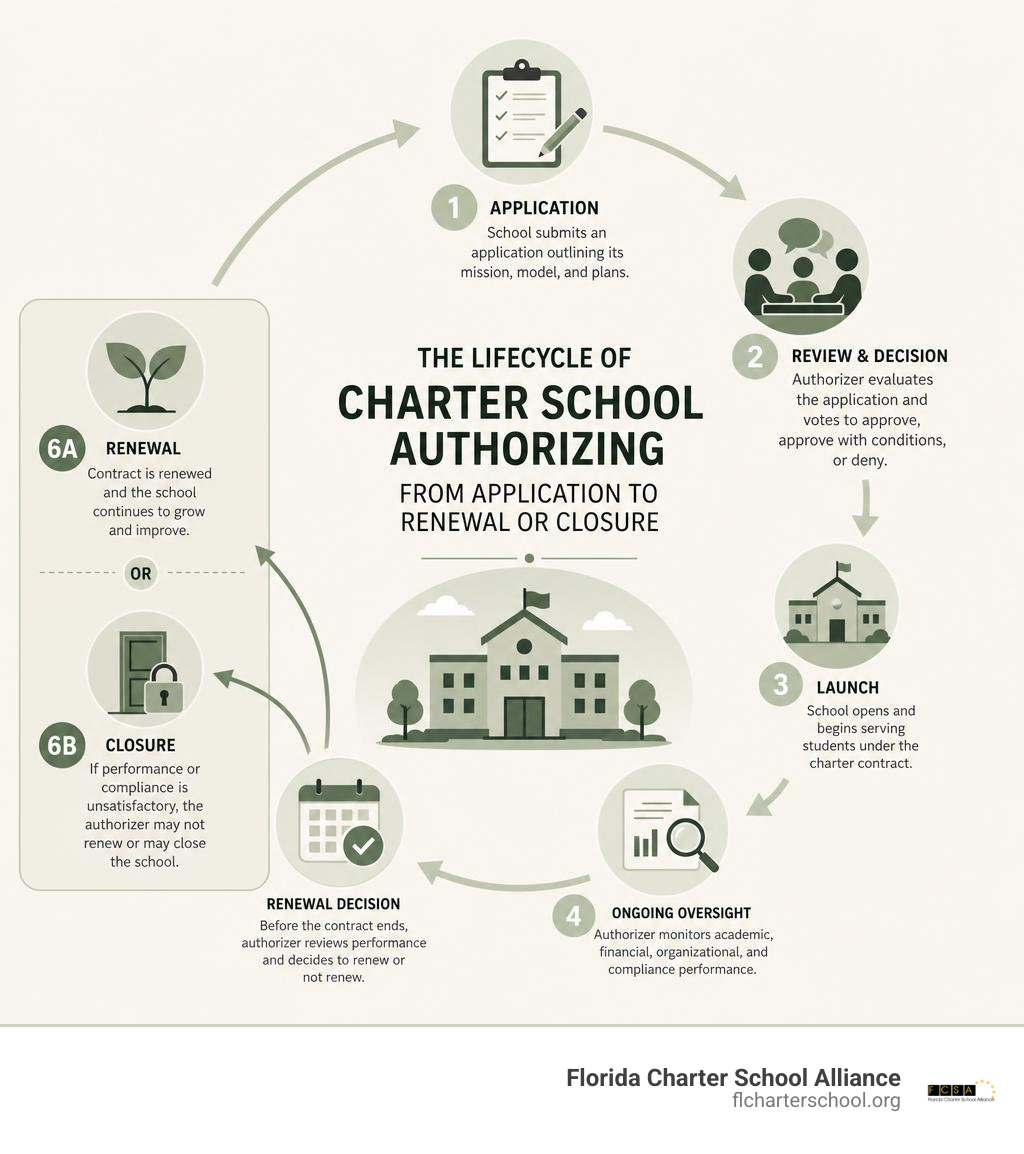
While accountability is vital, we must also recognize that school closures have profound impacts on families and neighborhoods. Nationally, approximately 7% of charter contracts are not renewed on an annual basis, and an additional 2.4% of charter schools are closed mid-term.
However, the data reveals a troubling trend: charter school closures disproportionately impact Black communities. Schools with Black founders or those serving predominantly Black student populations are closed at disproportionately high rates.
This reality underscores the need for authorizers to approach renewal decisions with immense care, combining rigorous academic standards with a deep understanding of community context. In Florida, we monitor these dynamics closely. For instance, understanding the specific Charter School Renewal Requirement in Hillsborough as of November 2021 helps school leaders navigate the renewal process with clear, predictable guidelines that protect both academic accountability and community stability.
Frequently Asked Questions about Charter School Sponsors
Who can serve as a charter school sponsor in South Carolina?
Under South Carolina law, charter school sponsors can be the South Carolina Public Charter School District (SCPCSD) Board of Trustees, any local school district board, or any registered public or independent institution of higher learning (IHE). All prospective higher education sponsors must go through a formal registration and readiness process managed by the South Carolina Department of Education.
What is the maximum oversight fee an authorizer can charge?
In most jurisdictions, including Florida, state law caps the administrative oversight fee that a sponsor can charge a charter school. This cap is typically set at 3% of the school’s per-student operational funding (and is often reduced or waived for high-performing charter school systems or after a certain enrollment threshold is met). This ensures that the vast majority of public funding goes directly into classroom instruction and student-centered learning.
How do authorizer training and professional development impact school success?
When authorizer staff are highly trained, they are better equipped to balance compliance monitoring with school autonomy. Professional development helps sponsors understand the unique operational structures of charter schools, leading to more consistent, fair, and efficient oversight. To support this, we encourage school leaders and district staff to utilize resources like our Authorizer Training Now Available On-Demand to foster a shared understanding of charter school operations.
Conclusion
Managing charter school authorizer relations is a continuous journey that requires professional diligence, clear communication, and a shared dedication to student success. When public charter schools and their sponsors work together in a spirit of collaborative compliance, we create the stable, innovative environments that Florida families deserve.
At the Florida Charter School Alliance, we are proud to advocate for high-quality public charter schools that expand parental choice and drive academic excellence. We believe that every child deserves access to an exceptional education, and we will continue to work tirelessly to ensure our state’s charter schools have the support, resources, and fair treatment they need to thrive.
If you are ready to join us in advocating for equitable resources and strong public school options for all families, we invite you to explore our work and learn how we can Fund All Public School Students Fairly. Together, we can build a brighter, more innovative future for Florida’s students.