
Are Charter Schools Better than Private Schools? Key Differences at a Glance
When exploring educational opportunities, many families ask whether charter schools are better than private schools. Research shows that public charter schools deliver comparable or superior academic achievement and strict public accountability without tuition costs, while private schools offer autonomous curricula and smaller classes at private expense. Both foster distinct learning environments that often differ from standard district programs, but their legal frameworks, funding streams, and operating principles are fundamentally distinct.
In Florida, clarifying the public status of charter schools is essential: charter schools are tuition-free public schools operating under performance contracts, whereas private schools function as independent entities supported by private tuition, donations, and state-funded scholarships.
| Criterion | Public Charter Schools | Private Schools |
|---|---|---|
| Tuition & Cost | 100% Tuition-free (publicly funded) | Tuition-based (average $12,790/year) |
| Admissions | Open enrollment; random lottery if oversubscribed | Selective admissions (tests, interviews, criteria) |
| Governance | Independent non-profit governing boards | Private boards, religious bodies, or owners |
| Accountability | Public reporting, state assessments, authorizer renewal | Independent accreditation; parent/board oversight |
| Curriculum | Aligned with state academic standards + special focus | Autonomous (secular, classical, faith-based, etc.) |
| Teacher Requirements | State certification standards apply | Varies; state certification generally not mandated |
| Special Education | Full IDEA and Section 504 compliance required | Voluntary accommodations; not bound by IDEA |
Funding, Tuition, and Governance Structure
The primary engine driving any school is its financial model. Public charter schools receive public per-pupil funding allocated by the state, ensuring that every child receives a high-quality education without paying tuition. These institutions operate as non-profit 501(c)(3) organizations overseen by voluntary governing boards, working in partnership with local school districts or state-approved authorizers to maintain financial transparency and academic excellence.
For parents interested in understanding how charter schools operate, this public structure ensures every dollar directly serves classroom learning and student development.
In contrast, private schools depend entirely on private tuition, endowments, and fundraising. Across the country, private school tuition averages $12,790 per student annually, though specialized independent high schools often cost considerably more. While Florida’s expanded school choice programs provide scholarships to help offset these expenses, private schools maintain absolute operational autonomy, answering solely to their internal boards rather than public authorizers.
Admissions, Access, and Student Diversity
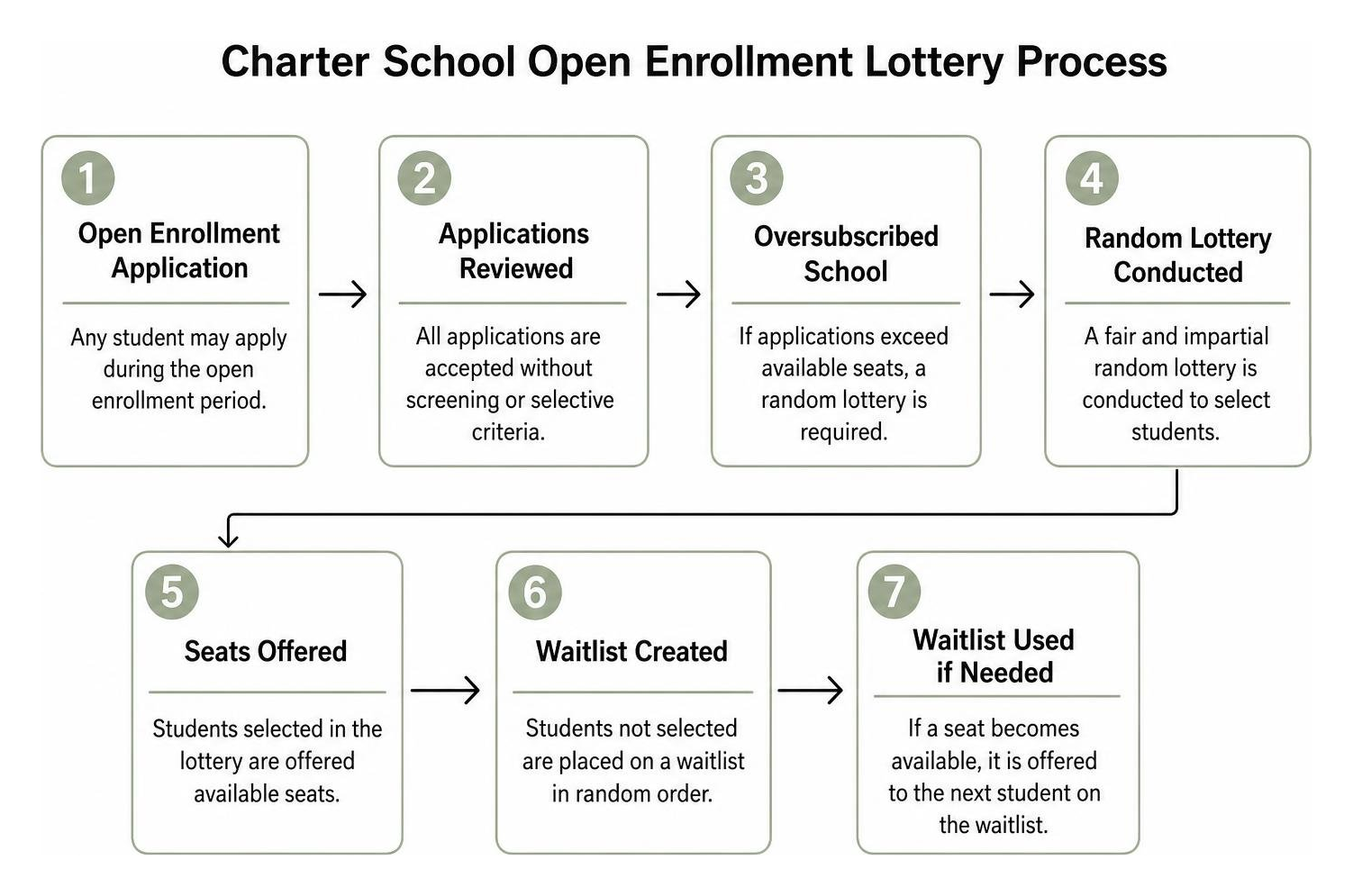
A defining pillar of public charter schools is educational access. Under federal and state civil rights laws, charter schools cannot screen applicants based on past grades, test scores, athletic ability, or household income. When student interest exceeds available classroom capacity, schools conduct equitable charter school lottery processes to assign seats fairly.
Private schools, however, manage their own enrollment criteria. Many require extensive entrance examinations, past academic records, family interviews, or adherence to specific religious principles. As a result, private school populations often reflect higher socioeconomic uniformity, whereas public charter schools reflect the rich demographic diversity of their local communities.
Academic Performance and Teacher Quality
Both charter and private schools enjoy the flexibility to implement innovative learning strategies, from specialized STEM tracks and dual-language immersion to rigorous classical models. Yet, how their instructional quality translates into measurable student achievement reveals surprising insights when reviewing peer-reviewed research.
Academic Outcomes: Are Charter Schools Better than Private Schools in Math and Reading?
At first glance, raw standardized test scores often show private school students scoring higher than their public school peers. However, educational researchers have repeatedly demonstrated that raw averages primarily reflect family wealth and parental education levels rather than superior school effectiveness.
When researchers apply rigorous controls for student background, race, disability status, and socioeconomic factors, that gap disappears. A landmark multilevel analysis of NAEP mathematics data revealed that public schools significantly outscored private school cohorts by more than 7 points in 4th grade and nearly 4 points in 8th grade on the National Assessment of Educational Progress (NAEP) mathematics exam.
Further research on school sectors and academic achievement showed that private school sectors trailed public schools by more than 10 points at grades 4 and 8 once demographic adjustments were made.
In Florida, where public charter schools are held to strict accountability standards, state assessments demonstrate that public charters routinely match or exceed traditional district averages, especially among minority and economically disadvantaged student groups. Tracking transparent student achievement data allows families to see measurable growth and academic excellence in real time.
Teacher Certification, Compensation, and Classroom Dynamics
Teacher qualifications and compensation also shape the daily classroom experience:
- Certification Requirements: In Florida, public charter school educators must meet standard state certification requirements, ensuring that instructors possess verifiable pedagogical training and subject mastery. Private schools are generally exempt from state educator certification rules, granting them the freedom to hire industry specialists (such as engineers or writers) who may lack formal teaching credentials.
- Teacher Compensation: Industry data indicates that charter school teachers earn an average of approximately $40,000 annually, while private school teachers earn roughly $37,000 per year, compared to the broader public school district average of $50,000.
- Class Sizes & Individualized Attention: Private schools typically maintain smaller class sizes, averaging 12 to 20 students per classroom. Public charter schools generally average 20 to 28 students per class, but often offset this difference with structured small-group interventions, high-dosage tutoring, and student-centered learning environments.
Weighing the Pros and Cons for Modern Families

With roughly 60% of American parents actively exploring new school options for their children in recent years, selecting the right environment requires balancing financial realities with individual academic needs.
Cost vs. Value: Are Charter Schools Better than Private Schools for Family Budgets?
From a financial standpoint, public charter schools offer exceptional value by delivering focused curricula without tuition fees. For a family with multiple school-aged children, avoiding annual tuition costs of $12,000 to $25,000 per child represents significant savings that can be redirected toward college savings or family needs.
The sustained momentum of Florida charter school growth—now serving over 400,000 students across hundreds of campuses—illustrates how public charter models empower parents with tuition-free educational choice. While some families offset private tuition through other state-supported assistance, out-of-pocket costs for specialized materials, uniforms, and non-covered tuition balances often remain a factor.
School Culture, Support Services, and Extracurricular Offerings
When evaluating school culture and support, parents should consider how each sector delivers student services:
- Special Education and Accommodations: Public charter schools are legally mandated under the Individuals with Disabilities Education Act (IDEA) and Section 504 to provide comprehensive evaluations, individualized education programs (IEPs), and necessary accommodations. Private schools are not bound by IDEA, meaning specialized services depend entirely on voluntary offerings.
- Extracurricular Activities & Athletics: Established private schools frequently feature dedicated athletic complexes, extensive fine arts facilities, and specialized clubs. While some newer charter schools focus capital resources primarily on academic classrooms, many establish athletic teams and arts programs through community partnerships and facility expansions.
- School Community Dynamics: Private school environments often operate with a customer-service focus driven by tuition investment, whereas public charter schools build inclusive communities centered on family empowerment, civic participation, and shared accountability.
How to Evaluate and Choose the Right School for Your Child

Finding the ideal school requires an active evaluation of your child’s specific interests and learning style. Rather than relying solely on institutional labels, we recommend touring prospective campuses and speaking directly with educators.
Essential Questions to Ask School Administrators
- Academic Performance: How does the school measure annual student growth, and what are its recent state assessment results?
- Curricular Mission: What instructional philosophy (such as STEM, classical trivium, or project-based learning) guides the daily schedule?
- Teacher Credentials: What percentage of classroom teachers hold professional state certifications in their assigned subjects?
- Student Support Systems: What specific reading and math intervention programs exist for students who need extra help or advanced enrichment?
- Safety and School Climate: How does the school foster a positive community culture, prevent bullying, and handle behavioral challenges?
- Total Family Costs: Are there required fees for uniforms, technology, activities, or after-school care?
Frequently Asked Questions About School Choice
Are charter schools completely free to attend?
Yes. Public charter schools are publicly funded and charge zero tuition for the standard school day. Like all public schools, they may request modest voluntary fees for optional services, including extracurricular clubs, school uniforms, or before-and-after school care programs. You can explore answers to additional practical topics in our common charter school questions guide.
Can private schools turn down applicants or expel students more easily than charters?
Yes. Private schools establish their own selective admissions policies, behavioral codes, and expulsion criteria. They are not subject to public due process requirements and may deny admission or dismiss students who do not meet academic, behavioral, or religious expectations. In contrast, public charter schools must follow established public due process procedures and open enrollment laws.
Do private school graduates perform better in college than charter school graduates?
Research shows that differences in college persistence and graduation rates between private and public school graduates largely disappear when adjusted for family income, parental education levels, and academic preparation. Students who attend rigorous, high-performing charter schools with dedicated college-preparatory programs demonstrate comparable postsecondary readiness and success.
Conclusion
Every child learns differently, and modern families deserve educational options that reflect their values and priorities. Public charter schools offer innovative learning environments, rigorous accountability, and proven student achievement—all within a tuition-free public system.
Whether your priority is specialized STEM coursework, a structured classical curriculum, or a supportive community environment, comparing your local options empowers you to make the best choice. For families exploring their public school options, choosing between charter and traditional public schools provides a helpful starting point for discovering the right fit for your student’s future.