Why Charter School Safety Compliance Training Is Non-Negotiable in Florida
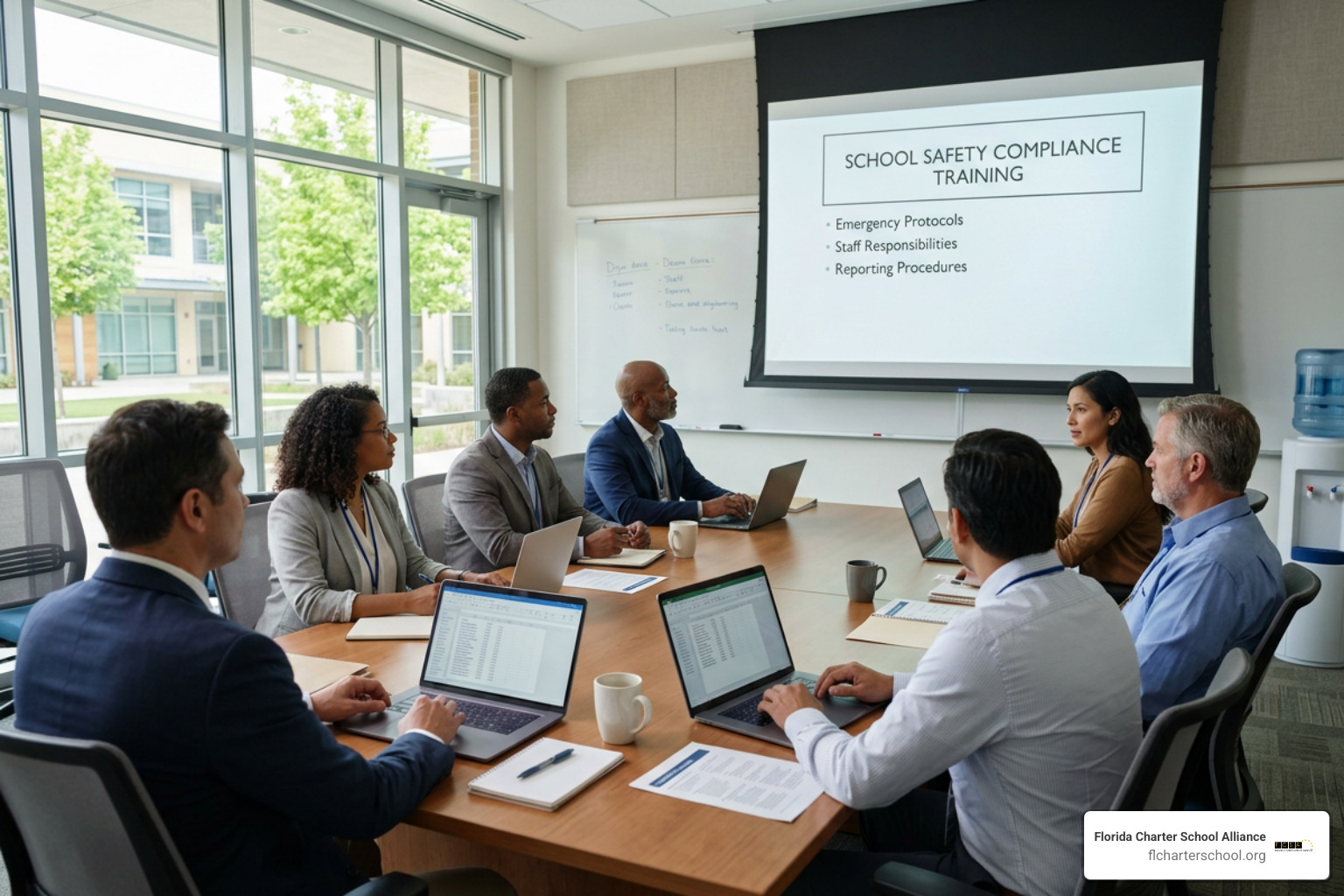
Charter school safety compliance training is a legal requirement — and a core responsibility — for every charter school administrator, governing board member, and staff leader in Florida.
Here is a quick overview of what Florida charter schools are required to cover:
| Training or Requirement | Who It Applies To | Key Deadline or Frequency |
|---|---|---|
| Comprehensive School Safety Plan (CSSP) | All charter schools | Updated annually by March 1 |
| Child Abuse Mandated Reporter Training | All staff | Within first 6 weeks of school year or hire |
| Bloodborne Pathogens Training | All staff | Annual |
| Pupil Suicide Prevention Training | All staff (grades 7-12) | Annual |
| Childhood Sexual Assault Prevention | All staff | Annual (risk management requirement) |
| Unannounced Safety Inspections | All charter schools | Every 3 years (Office of Safe Schools) |
| School Safety Specialist Appointment | School leadership | Required under Florida Statute 1001.212 |
| Threat Management Portal Training | Authorized personnel | By August 1 annually |
Florida charter schools are not exempt from state statutes on student health, safety, and welfare. In fact, with 732 charter schools serving over 406,000 students across 48 Florida counties in the 2024-25 school year, the stakes for getting this right have never been higher.
The challenge is real. Safety regulations change. Staff turns over. And the consequences of falling behind — from audit findings to potential charter revocation — are serious. Yet many schools still treat compliance as a once-a-year paperwork exercise rather than the ongoing operational priority it must be.
This guide is designed to help charter school leaders cut through the complexity and build a training program that actually works — protecting students, supporting staff, and keeping your school in good standing.
I’m Lynn Norman-Teck, Executive Director of the Florida Charter School Alliance, and I’ve spent my career supporting public charter schools in building strong, accountable operations — including the charter school safety compliance training systems that keep students and staff safe. In the sections that follow, I’ll walk you through the key legal requirements, the best platforms and services available, and the practices that Florida’s strongest charter schools use to stay compliant year-round.
The Legal Landscape of Charter School Safety Compliance Training

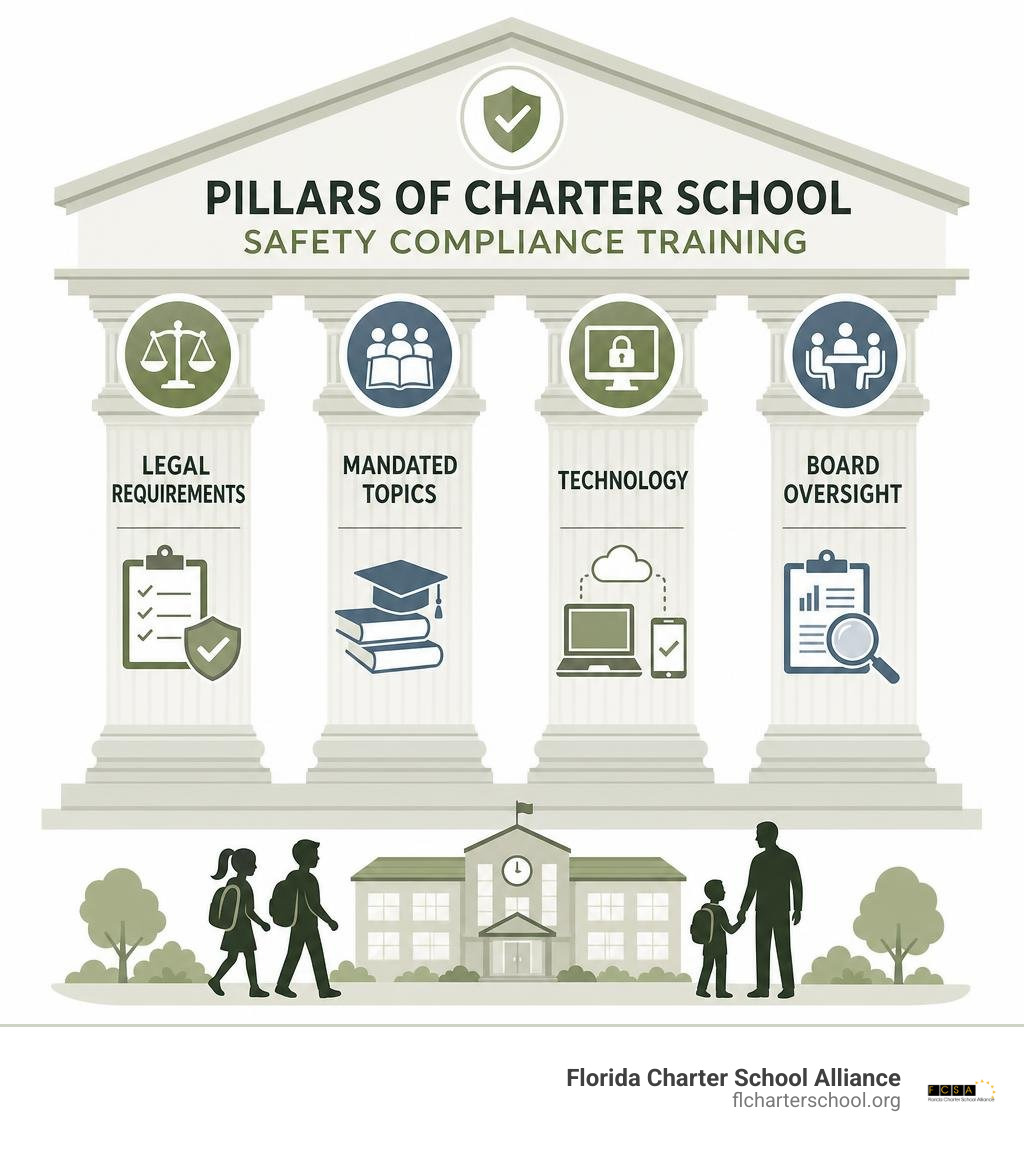
Public charter schools in Florida represent the pinnacle of educational innovation and parental choice. Because we operate with flexibility, we can design student-centered learning environments that truly unlock academic excellence. However, this flexibility comes with strict accountability. When it comes to the safety and welfare of our students, public charter schools must meet the exact same rigorous statutory standards as traditional public schools.
At the heart of our state’s regulatory framework is The 2025 Florida Statutes, specifically Section 1001.212, which establishes and empowers the Office of Safe Schools. This office serves as the central repository for school safety best practices, security risk assessments, and compliance monitoring.
One of the most critical aspects of this statute is the mandate for triennial unannounced safety inspections. The Office of Safe Schools conducts these hands-on evaluations of all public and charter schools while school is in session to ensure physical security and policy compliance. If an inspector identifies a deficiency, the timeline for action is incredibly tight:
- The school administrator must acknowledge receipt of the inspection report in writing within 1 school day.
- The school must provide written notice of how the noncompliance has been remediated within 3 school days.
- Reinspections for documented deficiencies must occur within 6 months.
To keep up with these fast-moving requirements, administrators must stay informed of legislative shifts. Reviewing resources like the New Safe School Requirements for Charter Schools helps us ensure our schools remain safe, welcoming, and fully compliant.
Understanding Florida Statutes and Safe School Requirements
Florida’s school safety model is proactive, focusing heavily on behavioral threat management and physical security personnel. Under state law, All Public Schools Must Have a Safe Schools Officer on Campus. This means every public charter school must secure a school resource officer, a school safety officer, or participate in the school marshal or Guardian program.
Additionally, our school safety specialists and threat management teams must be thoroughly trained in the Florida-specific behavioral threat assessment instrument. By August 1, 2025, our state requires the implementation of a centralized, digitized threat management portal. This portal integrates vital safety data from social media, law enforcement, and state agencies.
Because this portal contains sensitive student records, any authorized personnel with access must complete mandatory annual role-based training. Unauthorized access or release of records from this portal is a noncriminal infraction carrying a fine of up to $2,000. This underscores the need for thorough, role-specific safety compliance training for our teams.
Comprehensive School Safety Plans and Annual Deadlines
Every public charter school must develop, maintain, and adopt a Comprehensive School Safety Plan (CSSP) annually by March 1. Far from being a static binder on a shelf, the CSSP must be a dynamic, living document that guides daily operations and emergency readiness.
A compliant CSSP must outline specific disaster preparedness protocols, including:
- Monthly fire drills.
- Regular active shooter and lockdown drills.
- Natural disaster response, including localized emergency evacuation procedures.
- Adaptations for students with disabilities and English learners.
To see how high-performing charter schools structure these documents, leaders can review templates such as the School Safety Plan & Health and Safety Manual. The key to success is ensuring that all staff members — from classroom teachers and front-office coordinators to custodians and cafeteria workers — are actively trained on their specific roles within the plan.
Mandated Safety Training Topics for Charter School Staff

Designing a student-centered learning environment requires us to equip our educators with the knowledge to handle both physical emergencies and student wellbeing concerns. Florida mandates several core training topics that every charter school staff member must complete.
Essential Modules for Charter School Safety Compliance Training
To maintain a secure and compliant campus, our annual training schedules must prioritize several foundational modules:
- Child Abuse Mandated Reporter Training: All school personnel are legally mandated reporters. Staff must receive training within the first six weeks of the school year (or within six weeks of hire for new employees). If a staff member has reasonable suspicion of child abuse, they are legally prohibited from conducting their own internal investigation or contacting the parents first. They must make an immediate verbal report to the abuse hotline and submit a written report within 36 hours. Failure to report is a misdemeanor punishable by up to 6 months in jail and a $1,000 fine.
- Bloodborne Pathogens: Annual training is required for all employees to ensure they understand how to safely handle bodily fluids and prevent exposure to infectious diseases.
- Childhood Sexual Assault Prevention: Staff must be trained to recognize predator behaviors and boundary violations before misconduct occurs. Programs like CharterSafe Learning: CharterSAFE: Childhood Sexual Assault Prevention provide targeted, 41-minute training modules designed to protect students and mitigate school liability.
- Youth Suicide Awareness & Prevention: Essential for staff, particularly those working with grades 7-12, to identify warning signs and connect students with mental health professionals.
Integrating Student Wellbeing and Mental Health Support
Physical safety and mental health are deeply connected. High-quality charter schools leverage educational innovation to build positive school climates where students feel safe, valued, and empowered. Proactive safety compliance training should always integrate student wellbeing initiatives, such as:
- Bullying and Harassment Prevention: Training staff and students to recognize, report, and prevent bullying behaviors.
- Trauma-Informed Education: Helping teachers understand how trauma impacts student behavior and academic achievement, shifting the classroom dynamic from punitive measures to supportive interventions.
- Anonymous Reporting Tools: Promoting platforms like FortifyFL, which allow students and parents to report suspicious activity or mental health crises anonymously before they escalate.
To foster a collaborative approach to these initiatives, charter leaders can engage with the District Charter Collaborative: School Safety program, which shares best practices and safety resources across school networks.
Evaluating Technology Platforms for Compliance and Drills
Tracking compliance for dozens of staff members and documenting monthly drills can quickly overwhelm school leaders. Fortunately, digital platforms can streamline this administrative burden.
| Feature / Capability | Vector Solutions | Raptor Technologies |
|---|---|---|
| Primary Focus | Online staff training & LMS | Emergency management & physical security |
| Drill Management | Basic scheduling & logging | Real-time drill tracking & active response |
| Course Catalog | 100+ expert-authored K-12 courses | Focused safety & reunification training |
| Audit Readiness | Automated completion reports | Digital logs & physical security assessments |
| Implementation Model | Self-paced online platform | Multi-year professional services (CSP) |
Streamlining Audits with Digital Charter School Safety Compliance Training
Using a dedicated compliance platform helps charter schools maintain “audit-ready” status. Platforms like Vector Solutions allow HR managers to assign state-mandated courses, track progress, and send automated reminders to staff.
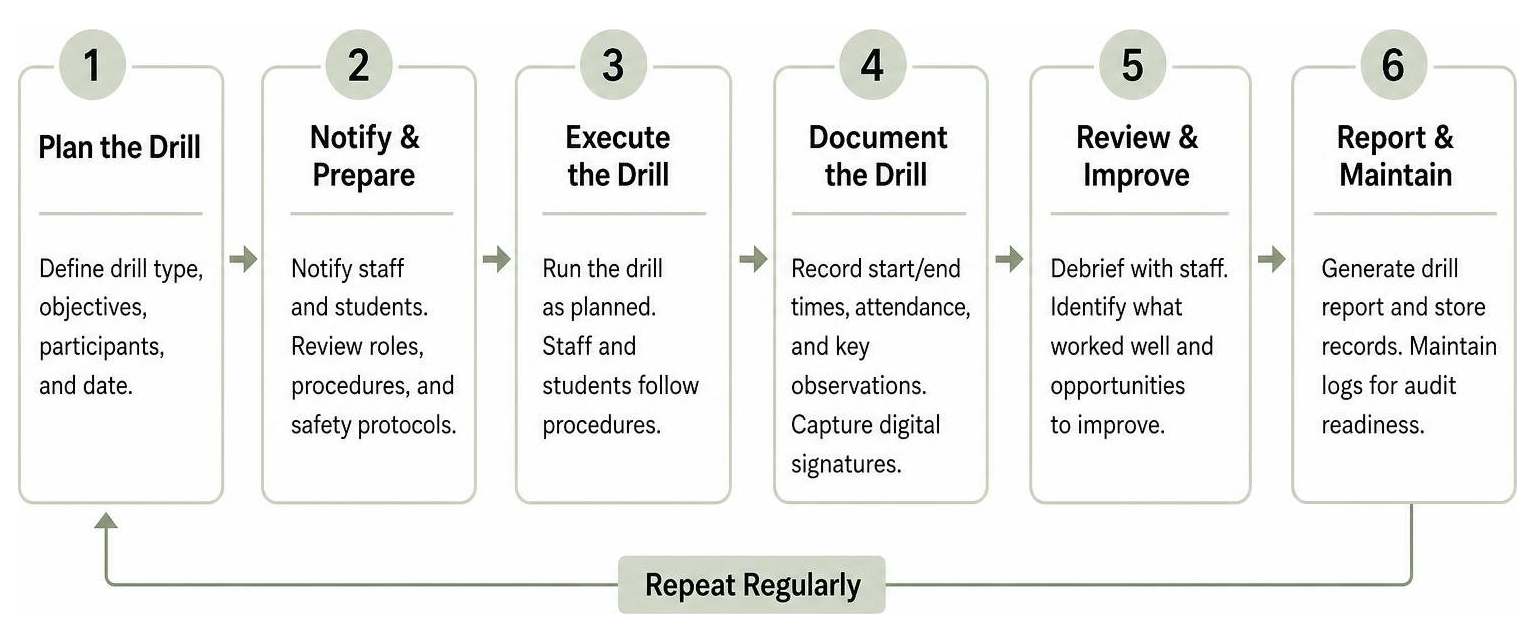
Similarly, the Safety Training & Compliance Suite from Raptor helps schools schedule, manage, and document emergency drills in real time. Rather than relying on paper logs, administrators can record drill execution on a mobile device, capture digital signatures, and automatically generate compliance reports for district sponsors and state inspectors.
Professional Services and Multi-Year Safety Roadmaps
For many charter schools, implementing new safety technology is only the first step. True safety is a continuous journey, not a software installation. To address this, some schools leverage multi-year professional services programs.
For example, Raptor’s Compliance and Success Program (CSP) offers a structured, 3-year professional services roadmap. This program partners schools with dedicated safety experts who help align school policies with their software, conduct hands-on staff onboarding, and facilitate annual physical practice runs of complex emergency workflows, such as student-parent reunification.
Best Practices for District-Level Monitoring and Board Oversight
While other states utilize localized district-level monitoring frameworks (such as LAUSD’s multi-tiered certification processes), Florida’s public charter schools operate under a state-monitored, district-sponsored model. Under Florida State Board of Education Rule 6A-1.0018 School Safety Requirements and Monitoring, school districts are responsible for monitoring charter schools within their boundaries to ensure compliance with all state safety mandates.
To navigate this oversight successfully, our charter school governing boards must act as the first line of defense. Board members hold a fiduciary duty to protect the school’s students, staff, and financial resources.
Best practices for board-level oversight include:
- Regular Agenda Items: Dedicate a portion of every public board meeting to reviewing safety metrics, drill completion logs, and staff training progress.
- Co-Signing Certifications: Ensure that both the school principal and the governing board chair formally review and sign off on annual safety compliance certifications.
- Professional Development for Leaders: Encourage school safety specialists and administrators to attend state-level training events, such as the 2026 FS3 Florida School Safety Security Conference and Collaborative Expo, to stay ahead of regulatory changes and network with safety experts.
Frequently Asked Questions about Charter School Safety
What are the consequences of non-compliance with safety training?
Non-compliance with state safety mandates carries severe consequences. If a charter school fails to remediate a safety deficiency identified during an inspection within the required timeline, it can face immediate audit findings, significant financial penalties, or a withholding of state funding. In extreme cases of willful or repeated non-compliance, the district sponsor has the authority to initiate charter revocation proceedings, as safety violations directly threaten student welfare.
How can safety training be adapted for diverse student populations?
Safety plans must be inclusive of all students. For English learners, emergency signage, student handbooks, and drills should be communicated in multiple languages (especially if a language is spoken by 15% or more of the student population). For students with disabilities, emergency plans must include individualized evacuation protocols, tactile or visual alarm systems, and specialized staff training to support students with sensory, mobility, or cognitive needs during a crisis.
What is the role of the governing board in safety compliance?
The governing board is legally and financially responsible for the school’s operations. It must adopt the school’s Comprehensive School Safety Plan, approve budgets for safety equipment and training platforms, and monitor compliance logs. Board discussions regarding safety policies must be documented in official, public board minutes to demonstrate active fiduciary oversight.
Conclusion
Building a robust, legally compliant charter school safety compliance training program is more than a regulatory box to check — it is the foundation upon which academic excellence and educational innovation are built. When parents choose a public charter school, they are trusting us to provide a high-quality, safe, and nurturing environment where their children can thrive.
By combining expert-authored training, modern compliance technology, and proactive board oversight, Florida’s charter schools can continue to lead the nation in both student achievement and campus safety.
If you need support aligning your school’s safety training with Florida’s rigorous compliance standards, we are here to help. Contact the Florida Charter School Alliance (FCSA) today to access localized training resources, templates, and advocacy support. And don’t forget to download our comprehensive hurricane preparedness guide for charter schools to ensure your campus is ready for Florida’s storm season.