Are Charter Schools Safer Than Public Schools? A Clear, Evidence-Based Answer
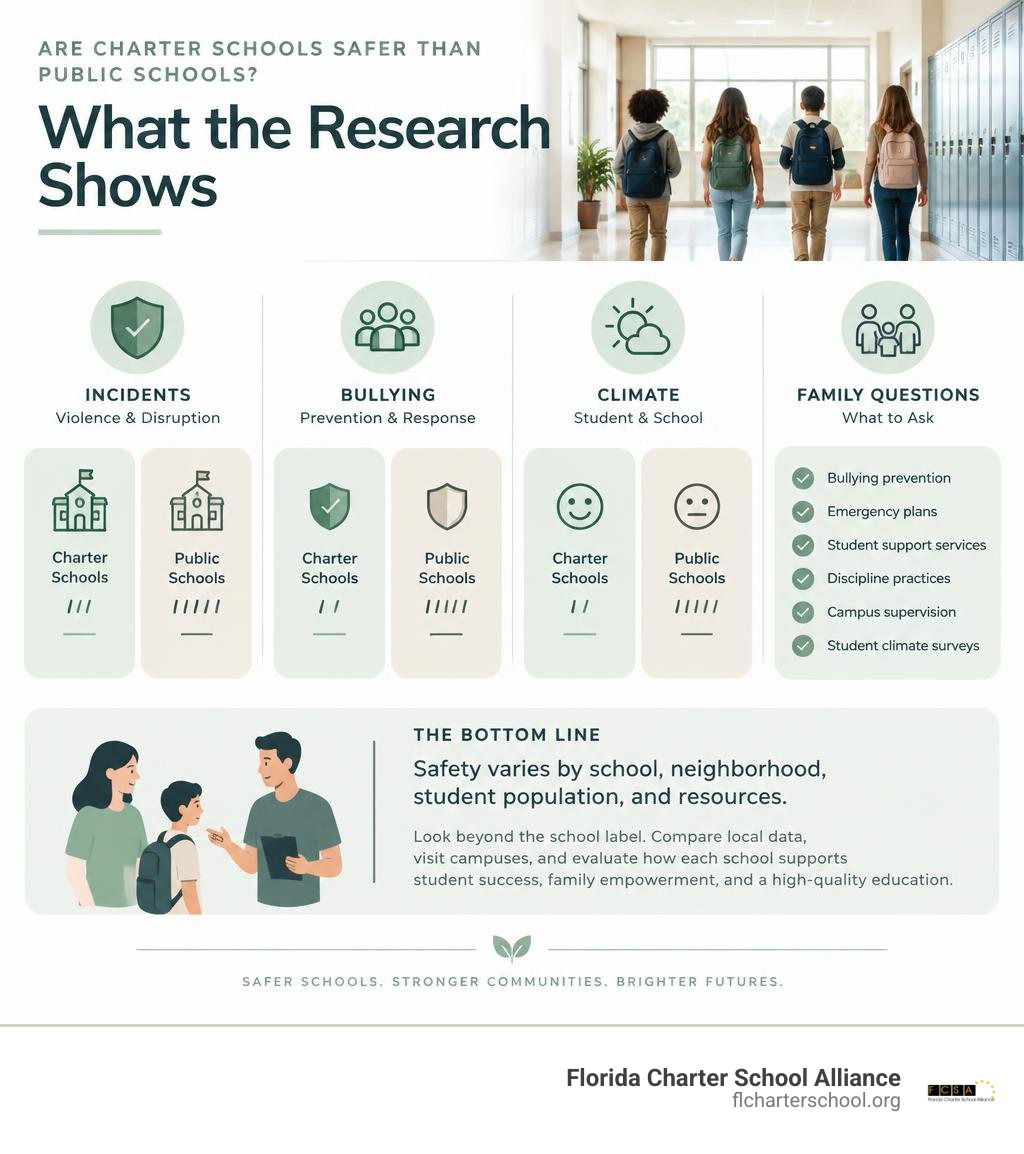
Research suggests that many public charter schools report fewer incidents of violence and disruption, and often receive stronger safety ratings from students and families than nearby district-run schools. But the answer is not universal. Safety varies by individual school, neighborhood, student population, reporting practices, and the resources available for prevention and support.
Studies in places such as Pennsylvania, New York City, and Detroit have found safety advantages for some charter schools. Smaller school communities, clear behavior expectations, family involvement, and student-centered learning may help. Yet reported incidents alone do not tell the whole story: a school with better reporting may appear to have more problems simply because it records them more consistently.
For families comparing educational opportunity, look beyond the school label. Ask each school about bullying prevention, emergency plans, student support services, discipline practices, campus supervision, and student climate survey results. Strong accountability and a caring school culture matter more than whether a school is charter or district-run.
I am Lynn Norman-Teck, Executive Director of the Florida Charter School Alliance, with experience in public charter school development, policy, and community engagement. When families ask, “are charter schools safer than public schools,” I encourage them to compare local safety data, visit campuses, and evaluate how each school supports school success, family empowerment, and a high-quality education.
Are Charter Schools Safer Than Public Schools? What the Research Shows

When parents evaluate learning environments, physical security and emotional well-being sit at the very top of their priorities. Educational research over the past decade confirms that school climate directly influences academic excellence. A comprehensive evidence on school sector safety review analyzing multiple studies revealed that eight out of nine evaluated research papers found positive safety effects associated with charter schools. Across student, parent, and administrator surveys, charter campuses consistently scored higher on perceived safety metrics than traditional district counterparts.
Safety is multifaceted. It spans reported physical assaults, weapon possession, classroom disruptions, and peer relational dynamics. To understand the full landscape, we must examine both objective administrative records and subjective climate surveys.
| Safety & Climate Indicator | Public Charter Schools | Traditional District Schools | Primary Influencing Factors |
|---|---|---|---|
| Serious Physical Incidents | Significantly lower reported rates per capita | Higher overall baseline rates | Campus size, active adult supervision, smaller footprints |
| Perceived Safety (Surveys) | Consistently rated higher by parents & students | Varies widely by neighborhood and school size | School-wide behavioral norms, family empowerment |
| In-Person Bullying | Lower reported incidence in brick-and-mortar settings | Moderate to high baseline reports | Tight-knit community culture, restorative interventions |
| Cyber Harassment | Parity or slightly higher reported tracking | Moderate baseline tracking | Digital device integration, transparent reporting protocols |
| Parental Engagement | High volunteerism and direct involvement | Variable district-wide participation | Intentional family partnerships, mission-driven choice |
What Incident Data Reveals: Are Charter Schools Safer Than Public Schools?
Objective incident logs offer critical insight into everyday campus life. According to the federal School Survey on Crime and Safety (SSOCS), a nationally representative school safety study examining 12,698 schools found that charter schools reported significantly fewer incidents of crime, violence, and classroom disruptions (p < .001).
State-level analyses corroborate these national findings. In Pennsylvania, an extensive evaluation comparing 58 climate indicators across 2,882 learning institutions revealed that public charter schools recorded fewer climate disruptions after controlling for student demographics. Similarly, data out of New York City showed charter schools reporting 79% fewer forcible sex offenses and 59% fewer serious physical injury assaults per pupil than neighboring district schools.
While physical altercations drop significantly in autonomous learning settings, cyberbullying trends remain an area requiring universal vigilance. Because public charter schools frequently pioneer digital curriculum models, educators place strong emphasis on digital citizenship programs to address online harassment proactively.
Bullying and Disciplinary Incidents Across School Types
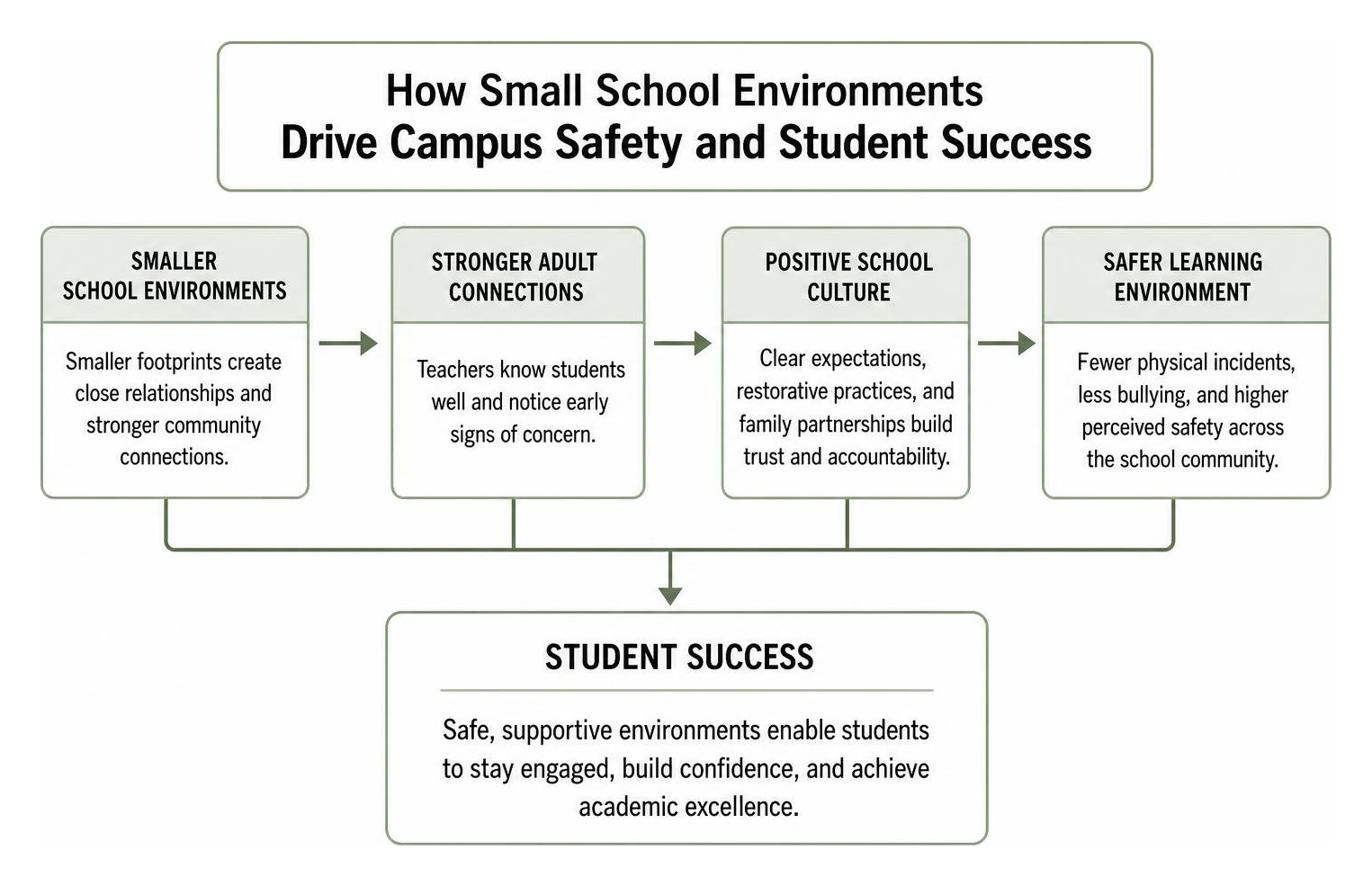
Bullying prevention requires intentional culture-building. When children feel anonymous in sprawling facilities, peer mistreatment is more likely to go unnoticed. In contrast, smaller learning communities enable teachers to recognize subtle shifts in student behavior quickly.
Rather than relying purely on exclusionary disciplinary tactics, high-performing charter programs often implement structured positive behavioral interventions and restorative justice practices. By establishing transparent behavioral expectations from day one, educators resolve conflicts before they escalate into serious safety infractions.
Key Factors Mediating School Safety in Charter Environments

Why do many public charter schools demonstrate strong safety outcomes? The answer lies not in a single policy, but in a network of mediating organizational factors. Research confirms that school size, deep family engagement, structured discipline, and comprehensive safety compliance training work together to foster secure environments where innovative learning thrives.
School Size and Community Culture
The physical and operational scale of a school plays a defining role in campus safety. Large secondary campuses housing thousands of students face structural hurdles in monitoring common areas like hallways, cafeterias, and parking lots.
Public charter schools typically operate with smaller overall enrollments. This smaller scale delivers measurable safety advantages:
- Enhanced Adult Supervision: Educators and administrators maintain visual contact across campus common areas throughout the school day.
- Meaningful Educator-Student Relationships: When teachers know every child by name, students are far more likely to report safety concerns, anxiety, or peer conflicts before they intensify.
- Cohesive Peer Norms: A unified campus culture encourages mutual accountability, reducing disruptive behavior and building a student-centered learning community.
Disciplinary Policies and Selection Mechanisms
Public charter schools are tuition-free public schools open to all children. When applications exceed available seats, admissions are determined via a blind, transparent lottery. Because charters operate under performance-based contracts, their governing boards hold the operational flexibility to craft clear, mission-driven codes of conduct.
This autonomy allows leadership teams to establish high standards for classroom conduct. When families actively select a school model, they commit to upholding those behavioral standards. This shared dedication between parents and educators creates a strong foundation of mutual trust and personal accountability.
Legal Regulations and Campus Security Mandates
A common misconception is that charter flexibility exempts schools from public safety mandates. In truth, public charter schools must strictly adhere to all federal, state, and municipal health, safety, and civil rights laws.
In Florida, every public school campus is legally mandated to implement rigorous physical security standards. Meeting the safe schools officer on campus requirements ensures that trained security professionals or school resource officers protect students every single day. Furthermore, charter boards actively implement the latest state safe school requirements for charter schools, which govern:
- Real-time mobile panic alert systems linked directly to emergency responders.
- Regular active-assault, fire, severe weather, and lockdown drill protocols.
- Universal staff safety training and behavioral threat assessment teams.
- Comprehensive campus facility hardening, including single-point entry systems and perimeter fencing.
Urban vs. Suburban Settings: Are Charter Schools Safer Than Public Schools?
Safety dynamics naturally shift depending on regional context. In dense urban centers, educational choice provides families with dedicated havens of academic focus and stability.
A landmark study examining public and charter schools across Detroit found that charter schools recorded lower actual crime rates than traditional district facilities. While perceived safety differences between sectors were influenced by commute distance and family involvement, neighborhood-based charter schools consistently maintained superior safety ratings. In both urban and suburban settings, active parental involvement serves as a primary pillar of school stability.
The Spillover Effect of School Choice on District Safety
The benefits of educational access extend beyond the walls of charter classrooms. When public charter schools introduce innovative safety practices and transparent incident tracking, neighboring district schools frequently upgrade their own security measures and reporting standards.
This competitive accountability encourages entire districts to modernize facilities, invest in positive behavioral supports, and listen more closely to parent feedback. As a result, expanding parental choice elevates safety standards for all public school students across the broader community.
Frequently Asked Questions About Charter and Public School Safety
Do charter schools have fewer reported violent crimes than public schools?
Large-scale national research, including the federal School Survey on Crime and Safety, demonstrates that charter schools report statistically fewer violent crimes, weapon incidents, and major disruptions than traditional district schools. While reporting precision varies by district, empirical data confirms lower overall incident rates in public charter settings. You can explore more fundamental details through our general charter school facts.
Are charter schools subject to the same health and safety laws as public schools?
Yes. Public charter schools must comply fully with all state and federal health, civil rights, building accessibility, and emergency safety mandates. They participate in state threat assessment protocols, conduct mandatory safety drills, and maintain certified safe-school officers on campus just like traditional district facilities.
How does school size affect student safety and bullying?
Smaller campus enrollment directly enhances student safety by minimizing blind spots and fostering strong teacher-student connections. In smaller schools, staff members quickly spot unauthorized visitors, monitor hallways effectively, and identify peer friction before it turns into chronic bullying.
Conclusion
Every child deserves an inspiring learning space where they feel secure, valued, and motivated to achieve their full academic potential. The evidence demonstrates that public charter schools frequently deliver safer, more supportive learning climates through smaller enrollments, strong family engagement, and student-centered behavioral expectations.
At the Florida Charter School Alliance, we believe that empowering families with clear facts is the best way to advance educational opportunity and student achievement. We encourage every parent to tour local campuses, meet with school leadership, review annual climate surveys, and ask direct questions about daily safety protocols.
To take the next step in finding the ideal educational fit for your family, explore our comprehensive guide to choosing between charter and traditional public schools.