Fundamentals of Crisis Management and Operational Distinctions
Understanding how crisis management functions requires separating it from everyday operational activities. While many leaders conflate risk management, incident response, and business continuity, these three disciplines address different points along a threat lifecycle.
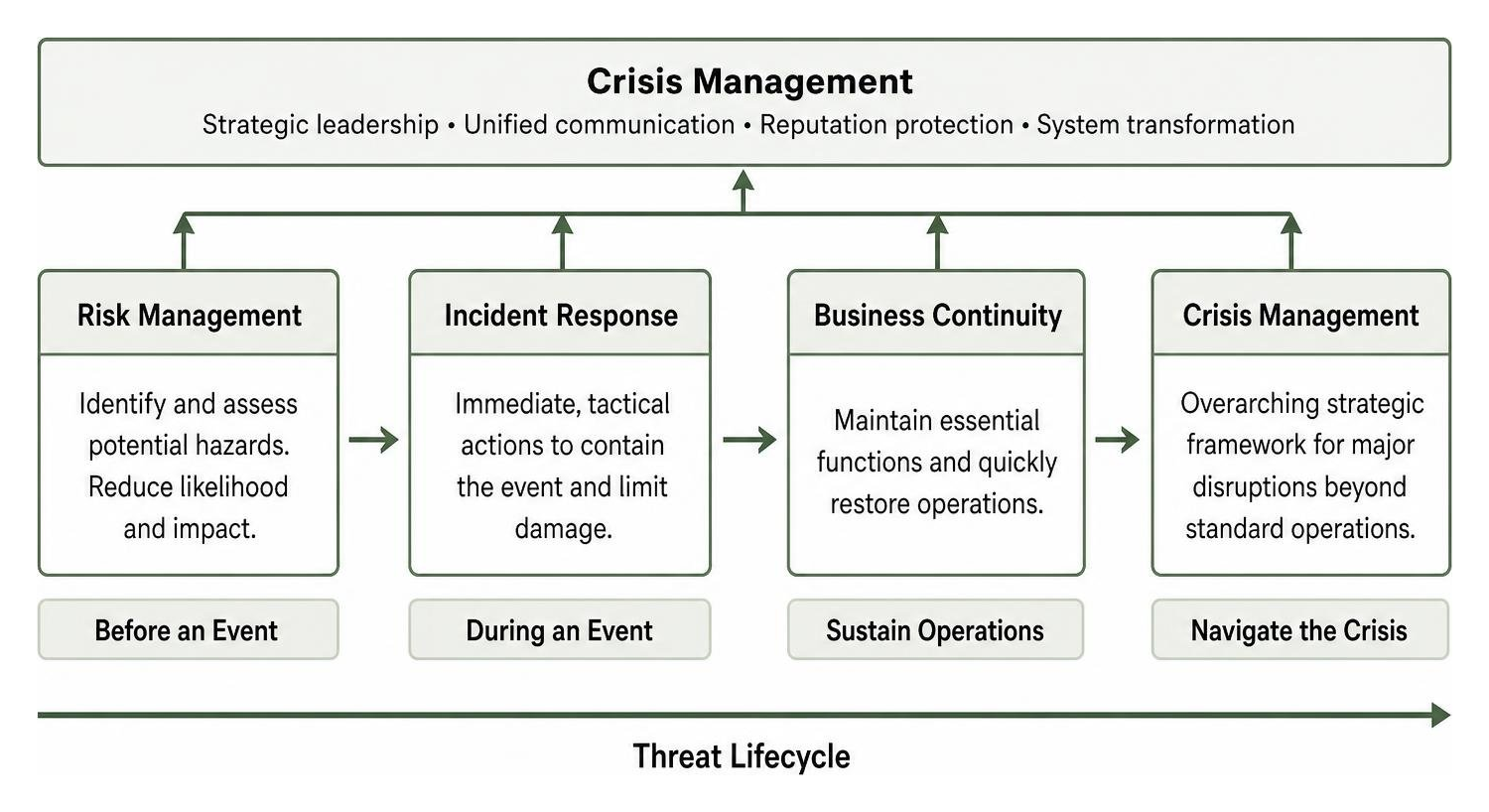
- Risk Management: Focuses on identifying potential hazards before they occur and taking steps to eliminate or minimize their likelihood.
- Incident Response: Involves localized, tactical actions taken immediately after an event occurs to contain damage (e.g., shutting down a compromised server or evacuating a room).
- Business Continuity: Ensures essential operational functions remain running or are quickly restored during a major disruption.
- Crisis Management: Serves as the overarching strategic framework. It guides executive leadership, unifies internal and external communications, protects organizational reputation, and navigates system transformation when standard operating procedures are insufficient.
As detailed in the ISO 22361:2022 Guidelines, a crisis differs from a routine incident because it fundamentally tests an organization’s coping capacity, requiring flexible leadership rather than static checklists.
| Operational Discipline | Primary Focus | Timing | Strategic Objective |
|---|---|---|---|
| Risk Management | Threat identification & avoidance | Pre-event | Prevent threats from occurring |
| Incident Response | Immediate tactical containment | Active event | Stop immediate operational damage |
| Business Continuity | Maintaining core operations | Event & post-event | Restore vital business functions |
| Crisis Management | Executive leadership & narrative strategy | Pre, active, & post-event | Protect lives, reputation, & long-term viability |
Threats generally fall into two categories: sudden crises and smoldering crises. Sudden crises occur without warning—such as a localized severe weather event or physical infrastructure failure. Smoldering crises begin as small internal issues, regulatory oversights, or minor policy breaches that escalate over time due to managerial neglect. Industry data indicates that 76% of business leaders have faced disruptions with medium-to-high operational impacts, yet PwC’s Global Crisis Survey reveals that 95% of leaders recognize their crisis capabilities still require improvement.
For Florida’s public charter schools, which operate as accountable, innovative educational models, recognizing the difference between these threat types ensures that administrators can protect student safety while preserving family trust.
Key Types of Organizational Crises
Organizations encounter operational threats across several distinct categories:
- Natural Disasters: Severe weather events, floods, and extreme environmental hazards that threaten physical infrastructure and human safety.
- Cybersecurity Breaches: Ransomware attacks, student or employee data theft, and sudden network outages that disrupt digital operations.
- Operational Failures: Critical facility breakdowns, major supply chain disruptions, or structural transportation failures.
- Reputational Damage: Misinformation campaigns, public relations missteps, or senior executive misconduct that damage community trust.
- Regulatory Non-Compliance: Sudden administrative changes, legal challenges, or failures to meet state governance standards.
Addressing these risks proactively allows public charter schools to demonstrate the resilience and transparency that Florida families expect from high-quality educational options.
The Impact of Social Media on Modern Emergency Situations
Social media has permanently compressed the decision-making window during an emergency. Information—and rapidly multiplying misinformation—spreads globally within minutes. When a critical incident occurs, affected communities no longer wait for formal media broadcasts; they look to digital platforms for real-time updates.
Failing to establish control of the digital narrative early creates an information vacuum that rumors quickly fill. Modern crisis management requires active digital media monitoring to detect early warning signals, assess public sentiment, and deploy rapid, multi-channel messaging. By maintaining verified digital communication channels (such as automated SMS alerts, official social profiles, and direct email updates), organizations can deliver accurate facts, maintain public trust, and calm community anxiety before false narratives take hold.
Core Phases of an Effective Response Framework
An effective response process moves through distinct phases, transforming chaotic events into structured, manageable actions.
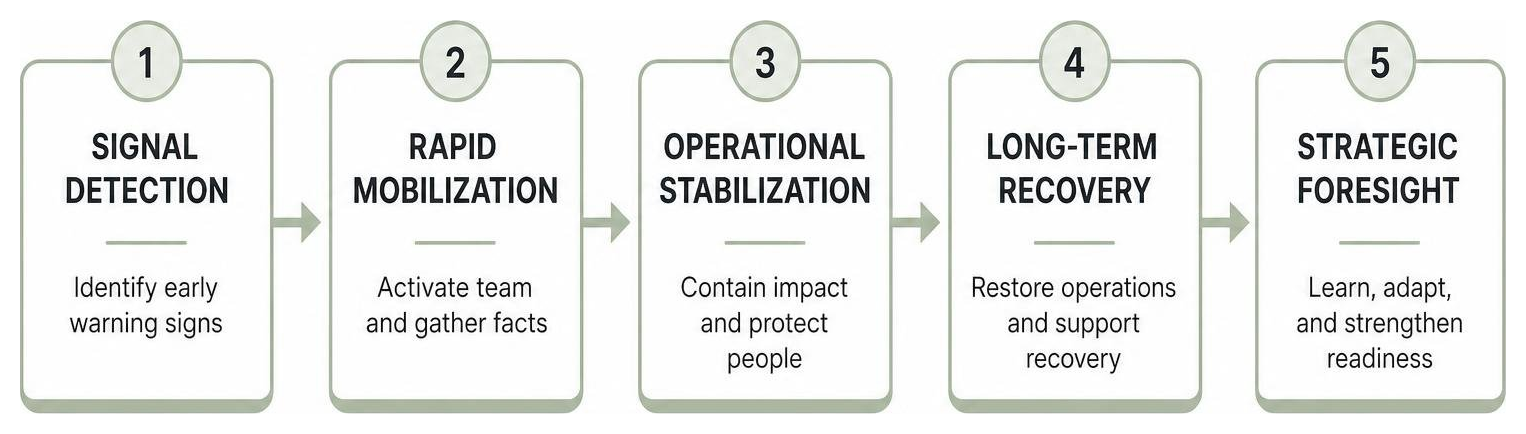
- Signal Detection: Recognizing early warning signs, operational anomalies, or emerging threats before they fully materialize.
- Rapid Mobilization: Activating the leadership team, establishing command protocols, and gathering verified facts within the first minutes or hours.
- Operational Stabilization: Containing the immediate damage, protecting human life, and creating space for deliberate executive decision-making.
- Long-Term Recovery: Restoring normal operations, re-establishing core services, and addressing emotional or physical impacts.
- Strategic Foresight: Embedded learning that updates institutional readiness and prepares the organization for future challenges.
As highlighted in The Hartwell Protocol Manual, controlling the initial hours of an emerging incident depends on disciplined fact-gathering, structured disclosure, and avoiding premature public speculation.
Roles and Responsibilities of a Crisis Management Team
A well-structured Crisis Management Team (CMT) relies on clearly defined roles to execute decisions under pressure. Delegating responsibilities based on daily functional expertise ensures rapid execution without confusion.
- Executive Leadership (Crisis Commander): Holds final decision-making authority, directs overall strategic direction, approves major public statements, and authorizes emergency resource deployment.
- Operational Leads: Oversee physical plant safety, manage facility containment, direct logistics, and coordinate directly with first responders or technical contractors.
- Communications Director: Drafts verified public statements, manages media inquiries, oversees digital channel updates, and ensures internal staff messaging aligns with external releases.
- Legal Counsel & Compliance Specialist: Evaluates liability exposure, ensures regulatory compliance, guides mandatory reporting requirements, and reviews all official public disclosures.
- Facility & IT Managers: Maintain physical infrastructure integrity, execute digital containment protocols, secure sensitive data, and lead technical service restoration.
Stakeholder Communication and Narrative Management
Communicating during a disruption requires balancing absolute honesty with leadership composure. When a crisis occurs, internal stakeholders—including staff, students, and board members—must receive verified updates before or concurrently with external media releases.
To preserve organizational trust, assign a single trained spokesperson to deliver all official messaging. Initial communications should always follow a structured framework:
- Acknowledge awareness of the incident directly.
- Outline the immediate action steps being taken to safeguard people and property.
- Detail clear safety instructions or guidance for those affected.
- Set a firm time window for the next scheduled operational update.
By maintaining consistent, empathetic, and fact-based communication across every stage of an incident, educational leaders protect student welfare while reinforcing their dedication to parental choice and operational accountability.
Building, Testing, and Refining Your Preparedness Strategy
True readiness is built through continuous planning, vulnerability mapping, and systematic alignment with state statutory standards.
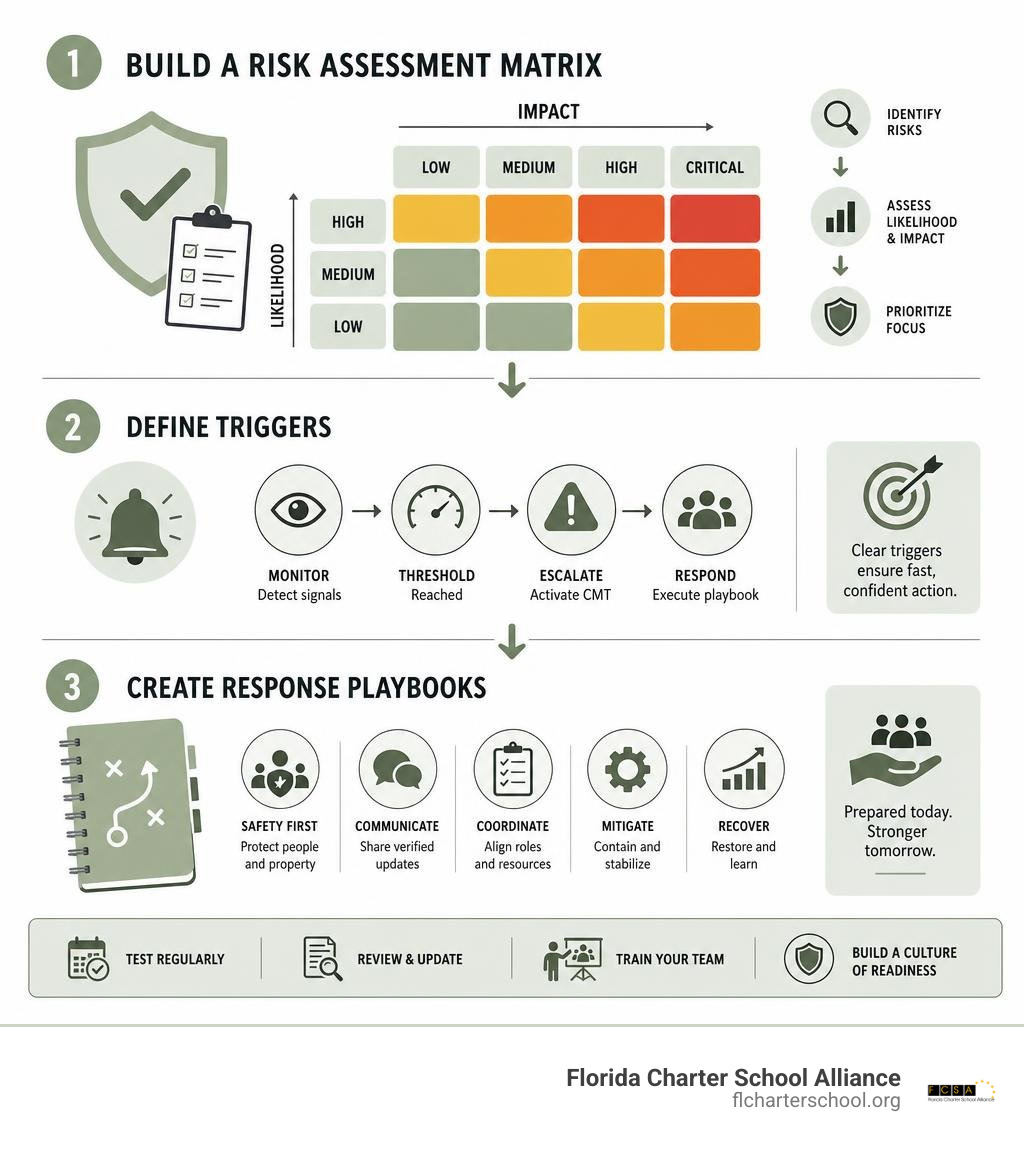
A comprehensive strategy starts with a thorough risk assessment matrix that ranks potential hazards by likelihood and operational impact. Establishing clear trigger thresholds—pre-defined criteria that automatically dictate when to escalate an issue from local management to full CMT invocation—eliminates delays when a sudden threat occurs.
For Florida charter schools, emergency readiness also means remaining aligned with evolving legal benchmarks, including the New Safe School Requirements for Charter Schools, which outline specific safety measures, security roles, and emergency reporting protocols.
Testing and Refining a Crisis Management Plan
Static binders stored on shelves do not protect organizations during live emergencies. Plans must be regularly stress-tested through realistic threat simulations, tabletop exercises, and scenario walk-throughs.

Tabletop drills bring key operational leads together to walk through simulated emergencies—such as extreme coastal storms, cyber disruptions, or facility outages—in real time. These exercises expose operational bottlenecks, highlight gaps in communication channels, and build behavioral muscle memory among decision-makers. Leaders looking to improve physical and operational event planning can reference practical guidelines like Special Event Risk Management Do’s and Don’ts to prevent preventable risks before public gatherings occur.
Post-Incident Learning and Building Long-Term Resilience
The end of an operational emergency marks the beginning of institutional hardening. Despite its value, data shows that only 18% of organizations maintain an optimized after-action review process.
An After-Action Review (AAR) should take place shortly after operations return to normal. The objective is not to assign personal blame, but to conduct an objective root-cause analysis:
- What specific threats or factors triggered the incident?
- Which response procedures functioned as intended, and which experienced delays?
- Did internal and external communication tools perform effectively?
- What policy updates, equipment investments, or staff training programs are required to prevent recurrence?
Collaborative forums, such as the District Charter Colab: School Safety, allow school leaders to share lessons learned, evaluate safety protocols alongside peer institutions, and build stronger, community-wide operational resilience.
Frequently Asked Questions About Organizational Disruption
How does crisis management differ from everyday risk management?
Everyday risk management is a proactive, preventative discipline designed to identify hazards, assess potential operational impacts, and implement safeguards to prevent negative events from occurring. In contrast, crisis management is an integrative framework deployed before, during, and after an extraordinary event occurs. It focuses on strategic leadership decision-making, stakeholder communication, reputation preservation, and stabilizing operations when standard risk controls fail or are surpassed by an unforeseen disruption.
What should be communicated first during an unexpected operational emergency?
The immediate initial communication must focus on verified facts, human safety, and operational reassurance. Organizations should first confirm awareness of the situation, detail the immediate safety protocols currently being executed to protect personnel or students, and instruct stakeholders on any required safety actions. Avoid speculation or premature conclusions regarding cause or liability. Conclude the initial update by establishing a clear, definite timeframe for when the next verified operational update will be provided.
How often should leadership teams test their emergency response plans?
Leadership teams should conduct formal reviews of their emergency plans at least annually, as well as immediately following any significant organizational change or actual emergency event. Practical testing—such as scenario-based tabletop exercises or full-scale simulations—should take place 1 to 2 times per year. Regular drills ensure that contact information remains accurate, role assignments stay clear, and executive decision-makers maintain the operational muscle memory required to lead confidently during complex emergencies.
Conclusion

Mastering crisis management requires continuous effort, clear operational leadership, and a steadfast commitment to protecting people, trust, and organizational stability. Public charter schools demonstrate how innovative educational models excel when backed by accountable governance, structured risk assessment, and transparent stakeholder communication.
By prioritizing student safety and maintaining resilient operational systems, public charter schools continue to serve as high-quality, innovative, and accountable educational options that enhance student achievement and expand parental choice for families across Florida.
To stay ahead of emerging security guidelines, connect with state safety experts, and strengthen your institution’s emergency response frameworks, we invite school leaders and administrators to participate in the Florida School Safety & Security Conference and Collaborative Expo. Additionally, you can access specialized severe weather playbooks directly through our comprehensive Hurricane Preparedness Guide for Charter Schools.
At the Florida Charter School Alliance, we remain dedicated to supporting charter school leaders, teachers, and governing boards with the practical tools, advocacy, and guidance needed to foster safe, resilient, and thriving educational communities.